

Geschreven door studenten die geslaagd zijn Direct beschikbaar na je betaling Online lezen of als PDF Verkeerd document? Gratis ruilen 4,6 TrustPilot
logo-home
Tentamen (uitwerkingen)

MNG3702 Assignment 2 (QUALITY ANSWERS) Semester 1 2026

Beoordeling
-
Verkocht
1
Pagina's
16
Cijfer
A+
Geüpload op
03-02-2026
Geschreven in
2025/2026

This document provides detailed workings, clear explanations, and well-structured solutions for the MNG3702 Assignment 2 (QUALITY ANSWERS) Semester 1 2026 - For assistance call or Whats-App us on 0.8.1..2.7.8..3.3.7.2 ... Question 1 Make a judgement with regards to the absorptive capacity of Tesla Inc. In your answer, you need to define the concept absorptive capacity (2 marks) and then make a judgement with regards to the absorptive capacity of the company based on the four dimensions that determine the absorptive capacity of an organisation . (4 marks of which 1 mark will be allocated for each one of the four dimensions of absorptive capacity and the application thereof to Tesla) [6 marks] Question 2 Resource allocation, for a company as successful as Tesla Inc., can be seen to consist of three key elements of strategy implementation that should be considered as an integrated whole. Discuss these three elements and apply your answer to Tesla Inc. (6 marks, of which 1 will be allocated to each element and one mark to the correct application to Tesla Inc.) [6 marks] Question 3 Management and leadership share many similar characteristics and outcomes. However, the two terms also differ in many ways. Would you consider Mr Elon Musk as a leader, or manager or both? Substantiate your answer in no more than 20 words. [4 marks] Question 4 Organisations respond to the challenges of responsibility and sustainability, either by taking a position on or by moving through six levels of commitment. 4.1 Identify these levels of commitment. (6 marks of which one mark will be awarded for the identification of each level of commitment) 4.2 Identify Tesla’s level of commitment. (1 mark for the correct identification of Tesla’s level of commitment) Downloaded by Edge Tutor () lOMoARcPSD| [TURN OVER] [7 marks] Question 5 Organisational structure is an integral part of the nature and architecture of an organisation. 5.1 Identify the specific organisational structure (or form) at Tesla Inc. (1 mark) 5.2 Explain the major challenge associated with this organisational structure and recommend one way of overcoming this challenge. (2 marks of which 1 mark will be awarded for the correct explanation of the challenge and 1 mark for the correct recommendation of a way to overcome the challenge identified) [3 marks] Question 6 Tesla encourages its employees to take calculated risks while driving innovations. Identify the three steps in the strategic risk management process. (13 marks, of which two marks will be awarded to the correct explanation of step one, two marks to step two and 9 marks to step three of the process) Hint: In step three, you need to focus on the various risk responses. [13 marks] Read the Twitter case study to answer question 7 Question 7 [22 marks] Change is an essential and inevitable feature of organisational life. At Twitter, Mr Davis was appointed to change the company’s culture. Balogun and Hope-Hailey developed the change kaleidoscope, which is founded on the principle that organisational change needs to be context specific and that the approach to change that the organisation chooses should be based on a thorough analysis of (i) the context within which change in taking place and (ii) a series of decisions around the way in which change is to be managed. 7.1 Discuss the eight core segments of the context within which change is taking place (according to the Balogun and Hope-Hailey model) and apply your answer to the Twitter case with the appointment of Mr Davis to change the company’s culture. (16 marks, of which one mark will be allocated to each core segment and one mark to the application of each segment to the Twitter case) Downloaded by Edge Tutor () lOMoARcPSD| [TURN OVER] 7.2 Based on the analysis of the context of the organisational change, Balogan and Hope-Hailey argued that those leading the change in an organisation need to make key decisions around the way in which the change process will be managed. Explain any three of these decisions and apply your answer to the Twitter case. In you answer, you need to explain the decision and then apply it to Twitter by indicating whether the company failed or successfully made the decision. (6 marks, of which one mark will be allocated to each decision and one mark to the correct application of the decision to the Twitter case). Read the Tesla Inc. and Twitter case studies to answer question 8 Read the Tesla Inc. and Twitter case studies to answer the following questions. Question 8 Edward Hall developed the Iceberg analogy of organisational culture in 1976. By making use of this analogy, compare the organisational culture of Tesla Inc. with the organisational culture of Twitter. In your answer, you need to briefly explain the various layers of organisational culture, and then compare the layers of the two companies. (9 marks, of which one mark will be allocated to each layer of organisational culture and two marks for comparing the two companies based on each layer) Tesla Inc. is an American electric vehicle company that seeks to eliminate the use of fossil fuels and aid the world’s transition to sustainable energy. Tesla designs and manufactures electric vehicles (electric cars and trucks), battery energy storage from home grid-scale, solar panels and solar roof tiles and related products and services. Tesla is one of the world's most valuable companies and remains the world's most valuable automaker with a market capitalization of more than US$600 billion. Company values Tesla’s core values comprise ‘doing the best, taking risks, respect, constant learning, and environmental consciousness.’ The company applies these values as the principles that govern the overall attitudes and practices of all stakeholders and its workforce. The emphasis on performance is a value that has seen Tesla advance technological-wise, as the company also encourages its employees to take calculated risks while driving innovations. In addition, the success recorded by Tesla so far has a lot to do with the corporation promoted by respect among the different players that meet the company. Such a conducive setting boosts the overall learning of everyone, and this translates to outputs that agree with the environmental protection principles at Tesla. Vision statement Tesla’s vision statement is ‘to create the most compelling car company of the 21st century by driving the world’s transition to electric vehicles. This vision acknowledges that the world has come to an era where only renewable energy should be prioritised. Its mission statement is ‘to accelerate the world’s transition to sustainable energy.’ Mission statement The mission statement by Tesla shows the shift towards business approaches that are more futuristic. The focus on sustainability indicates the compliance of the company with global demands of business methods that align with calls for green energy. Tesla adopted this mission statement after abandoning the earlier one whose focus was on transitioning the world to sustainable transport. Downloaded by Edge Tutor () lOMoARcPSD| [TURN OVER] Tesla has over 70,000 employees and five large facilities in the United States, China, and Europe, and 35 office locations across 9 countries. With over 499,000 units of electric vehicles sold globally, the iconic automotive company has played a huge role in achieving clean energy. Management Style Elon Musk - founder of Tesla, is known for his unconventional personality and one-of-a-kind leadership style, greatly impacts the way he builds company culture. His management style has the following key characteristics: • Reducing meeting sizes. The number of attendees at every Tesla meeting is kept small. Top contributors are allowed in the discussion and are also permitted to leave if they don’t find these meetings helpful to them or have nothing to contribute at the time. On most occasions, these meetings usually include 4 to 6 people who have value offering at the meeting. The company believes in the importance of productivity and time management. Musk prefers that employees be engaged in productive tasks instead of spending long hours in a meeting where they are not particularly needed. • Skip-level meetings. According to Musk, more layers of communication impart errors and lead to information loss. So, he encourages the act of skip-level meetings to get the pure information he needs. This also reduces the limits imposed on direct interaction experienced in big organisations. • Broad spans of control. Employees aren’t restricted and confined by rules at Tesla. Every employee is encouraged to do their jobs how they deem fit, as long as it yields positive results. By endorsing employees’ freedom, Tesla allows them to get innovative and creative to take actions that are contributory to the company’s growth. Tesla invests a lot in its employees by partnering with experts to train them. Only top leaders and managers are allowed to host training programs for employees’ development. • Trust and responsibility. Employees at Tesla are given a lot of responsibility and are trusted to handle the situation perfectly. Musk only hires motivated and smart people; hence, he has high expectations and standards. The educational background of its employees doesn’t matter as long as they have a track record of exceptional achievement. Employees at all levels are to carry out their tasks at the company as they own it. Tesla ensures that all employees are intentional about the success of the company. • Youth culture. Most Tesla's leaders are young and smart talents who quickly develop into their roles and are eager to learn how to do things better. Employees at Tesla are prompted to try out something new and out of their comfort zone. Its Performance Acceleration program contributes to the rapid adaptation of young employees at the company, as it helps them learn the ways of innovators in that field. Tesla prioritizes talent mobility and career management, which also contributes to the agile learning process of its employees. Organisational culture Downloaded by Edge Tutor () lOMoARcPSD| [TURN OVER] Tesla, Inc.’s organisational culture creates human resource competence necessary for innovative products in the global automotive business. Tesla’s organisational culture empowers its workforce to search for ideal solutions that make the business stand out in the automotive industry and the energy generation and storage industry. The company encourages employees to innovate to support continuous improvement of the business. For example, through its corporate culture, Tesla maintains the human resource capabilities important in its continuing growth in the global market for electric automobiles, batteries, solar panels, and related products. In this way, the corporation’s cultural traits function as a channel for adding to strategic effectiveness in enhancing the business. Through the organisational culture, Tesla Inc.’s management optimizes employees to achieve creative and innovative behaviors. These behaviors are essential to maintaining the technological innovation that forms part of the company’s foundation. Tesla’s organisational culture creates opportunities for innovation that keeps the competitiveness of the electric car business. The characteristics of this corporate culture encourage the company’s employees to generate new ideas and solutions. In this company analysis case, such behavioral factors contribute to Tesla Inc.’s competitiveness in facing automobile manufacturing firms like General Motors Company, Toyota Motor Corporation, Honda Motor Company, Nissan Motor Company, Bavarian Motor Works (BMW), Volkswagen, and others. Tesla’s innovative problem-solving organisational culture, motivates employees to develop profitable solutions to current and emerging problems in the target market. For example, the company employs its organisational culture in developing advanced electric vehicles as a solution to environmental issues surrounding automobiles that have internal combustion engines. The company’s ability to keep introducing advanced electric vehicles reflects the benefits of its corporate culture. Tesla Inc. identifies six main features of its organisational culture: • Move Fast. Speed affects Tesla Inc.’s competitive advantage. This characteristic of the organisational culture highlights the importance of employees’ capability to rapidly respond to trends and changes in the international market. For example, the corporation’s human resources provide the capability to develop cutting-edge products that match or exceed those from competing automotive firms. In this way, Tesla’s corporate culture facilitates business resilience through speedy responses to current issues and challenges in the global automotive industry. • Do the impossible. In developing cutting-edge products, Tesla must ensure that its corporate culture encourages employees to think outside the box. This cultural characteristic recognizes the importance of new ideas and solutions, but it also emphasizes the benefits of considering unconventional ways. For example, human resource managers train employees to go beyond conventional limits of productivity and creativity in automotive design, leading to the development of new solutions to energy and transportation needs. This condition opens new opportunities for Tesla Inc. to strategically improve its business performance. This cultural condition also makes the company an influential entity in prompting radical ideas in the international automotive and energy solutions market. Downloaded by Edge Tutor () lOMoARcPSD| [TURN OVER] • Constantly innovate. Innovation is at the heart of Tesla, Inc. This feature of the organisational culture focuses on the continuous nature of innovation at the company. For example, the corporation continuously researches and develops solutions that improve current energy storage product designs. In this context of the business analysis, constant innovation helps develop cutting-edge electric cars and related products. Continuous innovation maintains the competitive advantage necessary to address the strong force of industry competition determined in the Porter’s Five Forces analysis of Tesla Inc. The company addresses this need through a corporate culture that rewards constant innovation. Managers motivate employees to contribute to constant innovation in business processes and output. • Reason from ‘First Principles’. Elon Musk promotes reasoning from first principles. These principles revolve around identifying root factors to understand and solve problems in the real world. For example, Tesla Inc.’s energy storage products are one of the solutions to challenges in using renewable energy, and challenges in improving the efficiency of energy utilization. Through the company’s corporate culture, employees use first principles in fulfilling their jobs. Tesla’s human resource management involves training programs to orient employees to this feature of its organizational culture. • Think like owners. Tesla employs its organisational culture as a tool to maintain a mindset that supports business development. For example, the company motivates its workers to think like they own the organisation. This ownership mindset supports Tesla’s corporate vision and mission statements by encouraging employees to take responsibility and accountability in their jobs and in the overall performance of the multinational business. The ownership mindset is a powerful behavioral factor that helps grow and strengthen the integrity of businesses in various industries. This corporate cultural trait aligns workers with the company’s strategic objectives, thereby improving strategic effectiveness. • We are ALL IN. Tesla, Inc.’s organisational culture unifies employees into a team that works to improve the business. For example, this cultural characteristic helps minimize conflicts through teamwork. Such teamwork also develops synergy in the company’s human resources. As a result, the corporate culture maximizes the benefits from employees’ talents and skills. Synergistic teamwork contributes to Tesla’s competitiveness in the international automotive market. This unifying cultural approach also facilitates corporate management and strategy implementation throughout the organization. The abovementioned cultural characteristics indicate that Tesla, Inc. focuses on encouraging innovation that leads to useful products for the global market. The company’s progress and growth are based on technological innovation. Tesla Inc.’s organisational culture has remained focused on such innovation since the founding of the business. However, it is expected that the company will gradually change its corporate culture to accommodate new needs as the business expands and diversifies its product offerings. Tesla, Inc.’s Corporate Culture Implications and Advantages Downloaded by Edge Tutor () lOMoARcPSD| [TURN OVER] Tesla’s organizational culture puts emphasis on innovation. An advantage of this cultural trait is that it enables the corporation to develop high-technology products that attract its customers. For example, Tesla automobiles, combined with the company’s powerful branding, have an increasing share of the automotive market. This advantage aligns with Tesla’s generic competitive strategy and intensive growth strategies. The corporate culture is also advantageous in terms of support for rapid response and problem solving. This cultural trait keeps the company abreast with new technologies while making its products effective and relevant to customers’ needs and preferences. Organisational Structure Tesla, Inc. has an organisational structure that supports continuous business growth. The organisational structure takes a traditional form, considering the company’s managerial focus and control. The most significant characteristic of Tesla’s corporate structure is the function-based hierarchy in its global organisation. This hierarchy involves functional teams or offices that oversee domestic and international operations. The following functional offices direct and represent the global hierarchy: • Chairman & Chief Executive Officer • Finance • Technology • Global Sales and Service • Engineering • Legal Tesla, Inc. uses centralisation in its corporate structure. The emphasis of centralisation is managerial control on the entire organisation through decisions that a central group or team generates. In this case, the heads of the offices of the global hierarchy form the corporation’s central headquarters, which directly control all operations. In this organisational structure, Tesla minimally supports the autonomy of its regional or overseas offices. The company’s headquarters make most of the decisions for overseas operations. Divisions are used to implement different strategies and marketing campaigns, and to organize financial records and reports. The company’s main divisions in its corporate structure are (1) Automotive and (2) Energy Generation and Storage. These divisions are less significant compared to the function-based hierarchy of the organization. Also, Tesla’s organisational structure has the following geographical divisions mainly used for financial reporting: (1) United States, (2) China, (3) Norway, and (4) Other. Sources: Meyer, P. 2019. Tesla Inc.’s Organisational Culture & its characteristics. Panmore Institute. Available online Tesla Inc.’s Organizational Culture & Its Characteristics (Analysis) - Panmore Institute [Accessed 10 June 2022] Downloaded by Edge Tutor () lOMoARcPSD| [TURN OVER] Meyer, P. 2019. Tesla Inc.’s Organisational Structure & its characteristics. Panmore Institute. Available online Tesla Inc.’s Organizational Structure & Its Characteristics (Analysis) - Panmore Institute [Accessed 10 June 2022] Twitter Twitter is a social media site, and its primary purpose is to connect people and allow people to share their thoughts with a big audience. Twitter allows users to discover stories regarding today's biggest news and events, follow people or companies that post content they enjoy consuming, or simply communicate with friends. Twitter was created by Jack Dorsey, Noah Glass, Biz Stone and Evan Williams in March 2006 and launched in July of that year. Core values Twitter’s core values are: • Internet safety and education. The company fosters individual education about healthy digital citizenship and online safety. It does this by supporting organisations that tackle online safety issues such as bullying, abuse and hate speech. • Free expression and civil liberties. The company encourages initiatives that defend and respect all voices. It seeks to promote free expression and defend civil liberties. • Equality. Equality and universal acceptance for all people is one of Twitter’s values. The company considers that talent is found everywhere but opportunities are not. It works with organisations dedicated to promoting equal opportunity in science, technology, engineering, arts, and mathematics. • Environmental conservation and sustainability. Twitter works with NGOs worldwide to raise awareness and encourage action to protect the environment, fosters conservation and sustainability. • Crisis and emergency response. It offers tools and programs to help people communicate and get a humanitarian response when emergencies and natural disasters occur. Vision statement Twitter’s vision statement is to be the world’s most diverse and inclusive company. The company considers that to achieve this goal, it is key to serving the public conversation. It is also committed to having a workforce made of ‘amazing people’ around the globe who are also using the service every day. Downloaded by Edge Tutor () lOMoARcPSD| [TURN OVER] Mission statement Twitter’s mission statement is’ to give everyone the power to create and share ideas and information instantly without barriers’. History With the changing trends in the market in 2010 the need for making money was becoming eminent, and the owners of Twitter were in deep search for generating revenues. Twitter started as a free service, but it was high time that the social network to start generating revenues. The leaders were concerned about the revenues and were in search of a competitive business model in order to resolve this concern. Two alternatives were available to generate revenues: Alternative 1: Sponsored Tweets. Sponsored tweets, was the first alternative for the company to adapt in order to generate revenue. The website was offering sponsored tweets, but the intensity was very low and not generating effective results. The site could offer sponsored tweets more often or in regular intervals at the top of every page to grab the attention of the customers. Moreover, the industry was at the stage of early maturity, but Twitter was still growing. Although not much competition was there for Twitter and only Facebook was considered as a prime competitor, the site could use the sponsored tweets as the source of advertisements, providing sponsors a new source and medium of advertising their brands. Alternative 2: Sell the User information to Research Companies. Selling information after gaining permission from users to research companies would give a very authentic and sustainable source of generating revenue for the company. Research companies need data, but collecting data is a very challenging task. Therefore, they would appreciate this step and would be ready to buy data. Secondly, the research conducted would be a positive cause and would provide Twitter a reason to convince users to get permission for sharing information. In 2016, Twitter introduced the concept of sponsored hashtags or sponsored Tweets so that it became possible to use the hashtag even more. Moreover, Twitter does sell its users’ data in the form of a series of commercial data feeds that have become the basis of modern social media data mining. Twitter turned its first annual profit in 2018, but the company had a huge problem. In February 2019, they revealed that the company had 321 million monthly active users in the final three months of 2018, down five million from the prior quarter and nine million from the same period in 2018. That marked the third consecutive quarter of user declines. The company also announced that they will stop disclosing the figure entirely. In 2019, Dantley Davis was appointed as the company’s new vice president of design. Soon after joining Twitter, Mr Davis gathered his staff in a conference room at the company’s San Francisco headquarters. Twitter was too nice, he told the group, and he was there to change it. Mr. Davis asked employees to go around the room, complimenting and critiquing one another. Tough criticism would help Twitter improve, he said. The criticism soon flew. Several attendees cried during the two-hour meeting. Mr. Davis has played a key role in a behind-the-scenes effort over the 2019 to 2020 period to remake Twitter’s culture. The company had long been slow to build products, and under pressure from investors Downloaded by Edge Tutor () lOMoARcPSD| [TURN OVER] and users, executives landed on a diagnosis: Twitter’s collaborative environment had calcified, making workers reluctant to criticize one another. Mr. Davis, the company believed, was one of the answers to that problem. The turmoil that followed revealed the trade-offs and conflicts that arise when companies attempt dramatic cultural shifts and put the onus on hard-nosed managers to make that change happen. Mr. Davis repeatedly clashed with employees because of his blunt style. His treatment of workers was also the subject of several investigations by Twitter’s employee relations department, and of complaints to Jack Dorsey, the chief executive, that too many people were leaving. Company officials acknowledged that Mr. Davis may have gone too far at times, and he has promised to tone down the way he criticizes people. But they make no apologies and have even given him a more senior job title. Employee dissatisfaction, they said, is sometimes the cost of shaking things up. “This is actually a Twitter culture change that we’ve been trying to drive,” Jennifer Christie, Twitter’s head of human resources, said in an interview. Mr. Davis reported directly to Mr. Dorsey, company CEO. When hired, he was told to revamp Twitter’s design team and make it more diverse. His work was considered a model for other Twitter executives, and the company believes the diversity of his department improved under his leadership. “This was a turnaround role, and that meant changes to staff, changes to our work, changes to how we collaborate,” He spearheaded forays into new media, like audio tweets and chats, and championed efforts to clean up the conversation on Twitter, including prompts that encourage people to read articles before sharing them. But Mr. Davis’s management style was a bracing shift for employees at Twitter, which has not usually offered the astronomical salaries that are normal at other social media outfits. Instead, the company has tried to attract workers with a welcoming culture typified in a hashtag, #LoveWhereYouWork. Fourteen current and former Twitter employees, who were not authorized to speak publicly, spoke with unusual candor to The New York Times about the last two years working with Mr. Davis and the changes he brought to their workplace. As Twitter executives have driven toward a feistier version of their company, tension has not been limited to the design department and its adjoining research group. Workers have complained, sometimes bitterly, about being demoralized. “We’ve got teams across the board that are reporting things like, ‘We’re concerned about our future,’” Ms. Christie said. “They talk about fear or psychological unsafety.” Although some Twitter design employees were rattled by the meeting in which they were required to critique one another, Mr. Davis said several had thanked him for the candid feedback. “We’re kind to one another,” he said. “But also being nice means that you might shy away from saying the thing that needs to be said for us to move forward together.” Mr. Davis told his staff that he would push for improved performance, and he quickly criticized, demoted or cut workers, more than a dozen workers said. When employees were let go, he and other managers sometimes followed their departures with emails to the staff remarking on their poor work. Downloaded by Edge Tutor () lOMoARcPSD| [TURN OVER] Many employees feared they would be next on the chopping block. Although Mr. Davis, who manages 200 people, stressed the importance of giving critical feedback, he sometimes lashed out at workers who criticized him, employees said. But others believed Mr. Davis’s changes were essential to Twitter’s survival. The company needed to toughen up, one employee said. During 2019 and early 2021, two employee relations investigations into Mr Davis’s behavior in the company were implemented, in response to complaints that a culture of fear exists. Employee relations looked into every employee complaint and Mr. Davis tried to change his behavior. Company data was beginning to reveal widespread discontent on the design and research teams. Attrition under Mr. Davis had risen and was about double the rate of overall attrition at Twitter. In annual surveys, employees who worked for Mr. Davis consistently said at a higher rate than other Twitter employees that they felt “psychologically unsafe.” In March 2021, after a year of battling US election and coronavirus misinformation, many employees struggled with burnout. Mr. Davis announced that he planned to move away from the performance culture that had been his mandate. “My goal is for us to transition to a team of belonging, which is less transactional and more focused on care and support,” Mr. Davis wrote in an email to employees. “I was not celebrating wins, I was focused entirely on what was wrong,” Mr. Davis said, describing feedback he received from his staff. “Since then, I spent some time working on this. We have been celebrating wins, we have been finding ways for the team to come together.” A new era? On April 25, 2022, the Twitter board of directors agreed to a US$44 billion buyout by Elon Musk, the CEO of SpaceX and Tesla Inc. Sources: Conger, K. 2021. Culture change and conflict at Twitter. 2021. New York Times. Available online Fiegerman, S. 2019. Twitter records its first annual profit, but losing millions of users. CNN Business. Available online

Meer zien Lees minder
Instelling
Vak

Voorbeeld van de inhoud

MNG3702
Assignment 2 Semester 1 2026

Unique number

Due Date: 21 April 2026


This document includes:

 Helpful answers and guidelines
 Detailed explanations and/ or calculations
 References


Connect with the tutor on

+27 81 278 3372

, QUESTION 1

Absorptive capacity refers to an organisation’s ability to identify useful knowledge
from outside the business, understand its meaning, connect it with what the
organisation already knows, and apply it in ways that improve performance and drive
innovation (Venter and Botha, 2022). Tesla demonstrates strong absorptive capacity
in practice because its culture and leadership emphasise rapid learning, quick
decision making, and continuous innovation. This approach allows the company to
respond quickly to change, although tight central control can sometimes limit which
external ideas receive attention (Meyer, 2019b).

1. Acquisition of external information

Tesla actively scans its external environment for signals about new technologies,
changing customer needs, and growing environmental pressures. Its strong
commitment to electric mobility, battery technology, and renewable energy shows
that the company closely follows market developments, policy shifts, and
sustainability expectations. This constant awareness enables Tesla to respond
quickly by adjusting products, processes, and long term strategic direction (Meyer,
2019b).


© Study Shack 2026. All rights Reserved +27 81 278 3372

, QUESTION 1

Absorptive capacity refers to an organisation’s ability to identify useful knowledge
from outside the business, understand its meaning, connect it with what the
organisation already knows, and apply it in ways that improve performance and drive
innovation (Venter and Botha, 2022). Tesla demonstrates strong absorptive capacity
in practice because its culture and leadership emphasise rapid learning, quick
decision making, and continuous innovation. This approach allows the company to
respond quickly to change, although tight central control can sometimes limit which
external ideas receive attention (Meyer, 2019b).

1. Acquisition of external information

Tesla actively scans its external environment for signals about new technologies,
changing customer needs, and growing environmental pressures. Its strong
commitment to electric mobility, battery technology, and renewable energy shows
that the company closely follows market developments, policy shifts, and
sustainability expectations. This constant awareness enables Tesla to respond
quickly by adjusting products, processes, and long term strategic direction (Meyer,
2019b).

2. Assimilation of acquired information

Tesla’s flat management structure supports fast understanding and sharing of new
information. Small meetings and direct communication across levels help reduce
delays and misunderstandings. As a result, technical data and customer feedback
reach decision makers quickly, which strengthens organisational learning and
supports timely action (Meyer, 2019b).

3. Transformation of knowledge

Tesla shows strong ability to combine new information with existing knowledge. The
company integrates insights from software development, engineering, battery
systems, manufacturing, and energy solutions. This integration allows Tesla to turn
separate ideas into improved vehicle performance and innovative energy storage
products (Meyer, 2019b).


© Study Shack 2026. All rights Reserved +27 81 278 3372
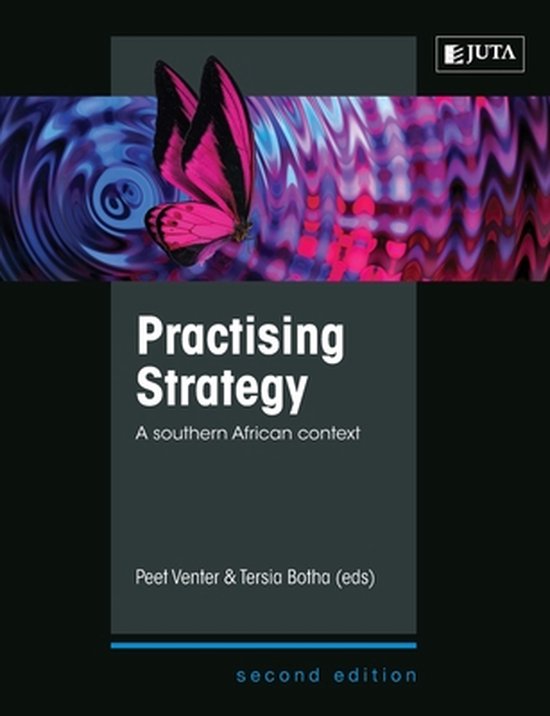
Gekoppeld boek

Geschreven voor

Instelling
Vak

Documentinformatie

Geüpload op
3 februari 2026
Aantal pagina's
16
Geschreven in
2025/2026
Type
Tentamen (uitwerkingen)
Bevat
Vragen en antwoorden

Onderwerpen

$4.65
Krijg toegang tot het volledige document:

Verkeerd document? Gratis ruilen Binnen 14 dagen na aankoop en voor het downloaden kun je een ander document kiezen. Je kunt het bedrag gewoon opnieuw besteden.
Geschreven door studenten die geslaagd zijn
Direct beschikbaar na je betaling
Online lezen of als PDF

Maak kennis met de verkoper

Seller avatar
De reputatie van een verkoper is gebaseerd op het aantal documenten dat iemand tegen betaling verkocht heeft en de beoordelingen die voor die items ontvangen zijn. Er zijn drie niveau’s te onderscheiden: brons, zilver en goud. Hoe beter de reputatie, hoe meer de kwaliteit van zijn of haar werk te vertrouwen is.
StudyShack Cornerstone College, Pretoria, Gauteng
Volgen Je moet ingelogd zijn om studenten of vakken te kunnen volgen
Verkocht
30977
Lid sinds
9 jaar
Aantal volgers
13939
Documenten
2074
Laatst verkocht
22 uur geleden
Study Guides for Unisa Students

4.1

1819 beoordelingen

5
1000
4
342
3
267
2
81
1
129

Recent door jou bekeken

Waarom studenten kiezen voor Stuvia

Gemaakt door medestudenten, geverifieerd door reviews

Kwaliteit die je kunt vertrouwen: geschreven door studenten die slaagden en beoordeeld door anderen die dit document gebruikten.

Niet tevreden? Kies een ander document

Geen zorgen! Je kunt voor hetzelfde geld direct een ander document kiezen dat beter past bij wat je zoekt.

Betaal zoals je wilt, start meteen met leren

Geen abonnement, geen verplichtingen. Betaal zoals je gewend bent via iDeal of creditcard en download je PDF-document meteen.

Student with book image

“Gekocht, gedownload en geslaagd. Zo makkelijk kan het dus zijn.”

Alisha Student

Bezig met je bronvermelding?

Maak nauwkeurige citaten in APA, MLA en Harvard met onze gratis bronnengenerator.

Bezig met je bronvermelding?

Veelgestelde vragen

