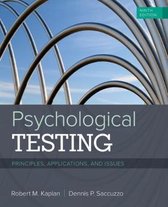
TEST BANK
psychological testing principles applications
and issues 9th edition by Kaplan
All 21 Chapters Covered
Copyright2Cengage2Learning.2Powered2by2Cogner Page21
o.
,Table of Contents
2 2
Part2I:2PRINCIPLES.
1. Introduction.
2. Norms2and2Basic2Statistics2for2Testing.
3. Correlation2and2Regression.
4. Reliability.
5. Validity.
6. Writing2and2Evaluating2Test2Items.
7. Test2Administration.2Part2II:2APPLICATIONS.
8. Interviewing2Techniques.
9. Theories2of2Intelligence2and2the2Binet2Scales.
10. The2Wechsler2Intelligence2Scales:2WAIS-IV,2WISC-IV,2and2WPPSI-III.
11. Testing2in2Education:2Tests2of2Ability2in2Education2and2Special2Education.
12. Standardized2Tests2in2Education,2Civil2Service,2and2the2Military.
13. Applications2in2Clinical2and2Counseling2Settings.
14. Projective2Personality2Tests.
15. Computers2and2Basic2Psychological2Science2in2Testing.
16. Testing2in2Counseling2Psychology.
17. Testing2in2Health2Psychology2and2Health2Care.
18. Testing2in2Industrial2and2Business2Settings.2Part2III:2ISSUES.
19. Test2Bias.
20. Testing2and2the2Law.
21. The2Future2of2Psychological2Testing.
1.Introduction.
Copyright2Cengage2Learning.2Powered2by2Cogner Page22
o.
, 1. According2to2recent2research,2growing2numbers2of2four-
year2colleges2are2not2relying2on2the2SAT2test2partly2because2 of
a. budget2constraints.
b. diversity2concerns.
c. reliability2issues.
d. quality2control.
ANSWER:2 b
2. Psychological2tests
a. pertain2only2to2overt2behavior.
b. always2have2right2or2wrong2answers.
c. do2not2attempt2to2measure2traits.
d. measure2characteristics2of2human2behavior.
ANSWER:2 d
3. The2specific2stimulus2on2a2test2to2which2a2person2responds2overtly2is2called2a(n)
a. overt2event.
b. answer.
c. item.
d. scale.
ANSWER:2 c
4. An2individual2test
a. involves2a2single2examiner2for2two2or2more2subjects.
b. involves2only2tests2of2human2ability.
c. can2be2given2to2only2one2person2at2a2time.
d. involves2more2than2one2examiner2for2a2single2subject.
ANSWER:2 c
5. A2group2test
a. can2be2given2to2multiple2people2by2one2examiner.
b. can2be2given2to2only2three2people2at2a2time.
c. involves2a2group2of2examiners2for2a2single2subject.
d. involves2only2tests2of2human2ability.
ANSWER:2 a
Copyright2Cengage2Learning.2Powered2by2Cogner Page23
o.
, 6. Previous2learning2can2best2be2described2as
a. achievement.
b. aptitude.
c. intelligence.
d. ability.
ANSWER:2 a
7. The2potential2for2learning2a2specific2skill2can2best2be2described2as
a. achievement.
b. aptitude.
c. intelligence.
d. ability.
ANSWER:2 b
8. One’s2general2potential,2independent2of2prior2learning,2can2best2be2described2as
a. achievement.
b. aptitude.
c. intelligence.
d. ability.
ANSWER:2 c
9. Achievement,2aptitude,2and2intelligence2can2be2encompassed2by2the2term
a. human2potential.
b. human2traits.
c. human2personality.
d. human2ability.
ANSWER:2 d
10. Structured2personality2tests
a. require2you2to2produce2something2spontaneously.
b. require2you2to2choose2between2two2or2more2alternative2responses.
c. involve2an2ambiguous2test2stimulus2about2which2the2response2is2structured.
d. involve2an2ambiguous2test2response.
ANSWER:2 b
Copyright2Cengage2Learning.2Powered2by2Cogner Page24
o.
psychological testing principles applications
and issues 9th edition by Kaplan
All 21 Chapters Covered
Copyright2Cengage2Learning.2Powered2by2Cogner Page21
o.
,Table of Contents
2 2
Part2I:2PRINCIPLES.
1. Introduction.
2. Norms2and2Basic2Statistics2for2Testing.
3. Correlation2and2Regression.
4. Reliability.
5. Validity.
6. Writing2and2Evaluating2Test2Items.
7. Test2Administration.2Part2II:2APPLICATIONS.
8. Interviewing2Techniques.
9. Theories2of2Intelligence2and2the2Binet2Scales.
10. The2Wechsler2Intelligence2Scales:2WAIS-IV,2WISC-IV,2and2WPPSI-III.
11. Testing2in2Education:2Tests2of2Ability2in2Education2and2Special2Education.
12. Standardized2Tests2in2Education,2Civil2Service,2and2the2Military.
13. Applications2in2Clinical2and2Counseling2Settings.
14. Projective2Personality2Tests.
15. Computers2and2Basic2Psychological2Science2in2Testing.
16. Testing2in2Counseling2Psychology.
17. Testing2in2Health2Psychology2and2Health2Care.
18. Testing2in2Industrial2and2Business2Settings.2Part2III:2ISSUES.
19. Test2Bias.
20. Testing2and2the2Law.
21. The2Future2of2Psychological2Testing.
1.Introduction.
Copyright2Cengage2Learning.2Powered2by2Cogner Page22
o.
, 1. According2to2recent2research,2growing2numbers2of2four-
year2colleges2are2not2relying2on2the2SAT2test2partly2because2 of
a. budget2constraints.
b. diversity2concerns.
c. reliability2issues.
d. quality2control.
ANSWER:2 b
2. Psychological2tests
a. pertain2only2to2overt2behavior.
b. always2have2right2or2wrong2answers.
c. do2not2attempt2to2measure2traits.
d. measure2characteristics2of2human2behavior.
ANSWER:2 d
3. The2specific2stimulus2on2a2test2to2which2a2person2responds2overtly2is2called2a(n)
a. overt2event.
b. answer.
c. item.
d. scale.
ANSWER:2 c
4. An2individual2test
a. involves2a2single2examiner2for2two2or2more2subjects.
b. involves2only2tests2of2human2ability.
c. can2be2given2to2only2one2person2at2a2time.
d. involves2more2than2one2examiner2for2a2single2subject.
ANSWER:2 c
5. A2group2test
a. can2be2given2to2multiple2people2by2one2examiner.
b. can2be2given2to2only2three2people2at2a2time.
c. involves2a2group2of2examiners2for2a2single2subject.
d. involves2only2tests2of2human2ability.
ANSWER:2 a
Copyright2Cengage2Learning.2Powered2by2Cogner Page23
o.
, 6. Previous2learning2can2best2be2described2as
a. achievement.
b. aptitude.
c. intelligence.
d. ability.
ANSWER:2 a
7. The2potential2for2learning2a2specific2skill2can2best2be2described2as
a. achievement.
b. aptitude.
c. intelligence.
d. ability.
ANSWER:2 b
8. One’s2general2potential,2independent2of2prior2learning,2can2best2be2described2as
a. achievement.
b. aptitude.
c. intelligence.
d. ability.
ANSWER:2 c
9. Achievement,2aptitude,2and2intelligence2can2be2encompassed2by2the2term
a. human2potential.
b. human2traits.
c. human2personality.
d. human2ability.
ANSWER:2 d
10. Structured2personality2tests
a. require2you2to2produce2something2spontaneously.
b. require2you2to2choose2between2two2or2more2alternative2responses.
c. involve2an2ambiguous2test2stimulus2about2which2the2response2is2structured.
d. involve2an2ambiguous2test2response.
ANSWER:2 b
Copyright2Cengage2Learning.2Powered2by2Cogner Page24
o.