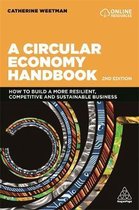
A Circular Economy Handbook
Recap
Catherine Weetman, second edition
Recap written by Peerke Linnartz, Student International business at Van Hall Larenstein.
,Table of content
Chapter 1................................................................................................................................................3
Chapter 2 the design and supply chain...................................................................................................4
Chapter 3 Circular business models CBM...............................................................................................6
Chapter 4................................................................................................................................................8
Chapter 5..............................................................................................................................................11
Chapter 11 Supply chain strategy.........................................................................................................13
Chapter 12 supply chain operations.....................................................................................................15
,Chapter 1
In the past few decades, the demand is much higher than the supplies/ resources we have.
Influences become key elements of a circular economy.
A sustainable economy consists of the five sustainable pillars:
1. Nature conversation: we depend on resources from nature
2. Limit toxic substances in nature
3. Resource productivity: developed industrial countries need to reduce the usage of material
to produce something. Resource consumption need to drop by a factor of 10
4. Social ecology: we need to lower the inequalities between race, age, sex dignity and
democracy, social integration, security, and safety.
5. Cultural ecology; introducing norms values knowledge and behaviour towards risks.
Nature capitalism:
1. Increase the productivity of natural resources: the use of natural resources can stretch 10 or
100 times more than now by innovation.
2. Biology inspired us to use the butterfly and everything we attract from nature should be able
to be returned.
3. Service business models deliver a flow and continuous flow of cash which reduces the use of
resources.
4. Reinvest in natural capital to ensure feature prosperity and welfare.
The blue economy is that we can break down everything back to monocles if we wait just long
enough. Waste does not exist, it is the fault of humans to use a resource again.
Cradle to cradle principles
1. Material health: value materials as nutrients for sale
2. Material Reutilization maintain a continuous flow of biological and technical nutrients
3. Renewable energy: power all operations with renewable energy
4. Water stewardship: regard water as a precious resource
5. Social fairness: celebrate all people and natural resources.
Ellen MacArthur foundation EMF principles
1. Design out waste and pollution
2. Keep material in use (keep products in use instead of using them up. Keep materials
circulating in the economy.)
3. Renegade natural systems. what if we can restore the damage we did to the earth.
Circular strategies
1. Reuse resell and share—extend the life of a product to give it a second circle.
2. Maintain and repair—to keep the product in a good state to use it as long as possible.
3. Refurbish and remanufacture—refurbish includes cleaning, repairs on service level and
maintenance, remanufacture involves major inspection repair and replacement of worn
materials to make it as good as new.
4. Recycling—is the least effective loop. Recycling requires a lot of energy and may need
expensive labour or equipment to sort and separate different materials.
, Chapter 2 the design and supply chain
Four loops for materials to extend and maintain a product
Reuse resell and share—are ways to keep the original product in use, such as reselling it, pay
as you go models, or sharing it, so more people have access to it.
Maintain and repair—is to keep the product working efficiently and effectively for longer.
Refurbish and remanufacture—which needs deeper levels of intervention. Refurbishing
involves cleaning, surface-level repairs and polishing the product or equipment.
Remanufacturing involves rigorous inspection, repair and replacement of worn materials and
components, aiming to make the product as good as new.
Recycling—taking a product apart into materials that can be used to make the same product.
We value the tighter loops because it takes less effort to retain more value out of them. The wider
the loops the more effort is needed to reuse material.
Technical nutrients are materials that have been grown over the millions of years and are not
renewable and are on the earth infinite.
Biological nutrients are renewable, living materials from the biosphere, so they have lived.
In closed loops is less effort taken to retain a product and use it again.
In an open loop, a part is missing to close it, which resolves in the fact that it is dumped as wasted or
burned.
Open-loop cross-sector is a form whereby products are sold to other sectors where they can use it as
a material source. For example, the waste of sawing wood, that can be used to make paper.
Materials can be biological (harvested from nature) or technical extracted or mined) or mixed
including any processing to refine or clean them ready for use.
Compounds consist of two or more ingredients or elements, chemically united. Some further
processing is involved, perhaps using heat or water or a chemical agent to create a reaction.
Components are parts assemblies or sub-assemblies included in the finished product.
Process inputs include energy, water, cleaning products, coatings, dyes and chemicals.
Recap
Catherine Weetman, second edition
Recap written by Peerke Linnartz, Student International business at Van Hall Larenstein.
,Table of content
Chapter 1................................................................................................................................................3
Chapter 2 the design and supply chain...................................................................................................4
Chapter 3 Circular business models CBM...............................................................................................6
Chapter 4................................................................................................................................................8
Chapter 5..............................................................................................................................................11
Chapter 11 Supply chain strategy.........................................................................................................13
Chapter 12 supply chain operations.....................................................................................................15
,Chapter 1
In the past few decades, the demand is much higher than the supplies/ resources we have.
Influences become key elements of a circular economy.
A sustainable economy consists of the five sustainable pillars:
1. Nature conversation: we depend on resources from nature
2. Limit toxic substances in nature
3. Resource productivity: developed industrial countries need to reduce the usage of material
to produce something. Resource consumption need to drop by a factor of 10
4. Social ecology: we need to lower the inequalities between race, age, sex dignity and
democracy, social integration, security, and safety.
5. Cultural ecology; introducing norms values knowledge and behaviour towards risks.
Nature capitalism:
1. Increase the productivity of natural resources: the use of natural resources can stretch 10 or
100 times more than now by innovation.
2. Biology inspired us to use the butterfly and everything we attract from nature should be able
to be returned.
3. Service business models deliver a flow and continuous flow of cash which reduces the use of
resources.
4. Reinvest in natural capital to ensure feature prosperity and welfare.
The blue economy is that we can break down everything back to monocles if we wait just long
enough. Waste does not exist, it is the fault of humans to use a resource again.
Cradle to cradle principles
1. Material health: value materials as nutrients for sale
2. Material Reutilization maintain a continuous flow of biological and technical nutrients
3. Renewable energy: power all operations with renewable energy
4. Water stewardship: regard water as a precious resource
5. Social fairness: celebrate all people and natural resources.
Ellen MacArthur foundation EMF principles
1. Design out waste and pollution
2. Keep material in use (keep products in use instead of using them up. Keep materials
circulating in the economy.)
3. Renegade natural systems. what if we can restore the damage we did to the earth.
Circular strategies
1. Reuse resell and share—extend the life of a product to give it a second circle.
2. Maintain and repair—to keep the product in a good state to use it as long as possible.
3. Refurbish and remanufacture—refurbish includes cleaning, repairs on service level and
maintenance, remanufacture involves major inspection repair and replacement of worn
materials to make it as good as new.
4. Recycling—is the least effective loop. Recycling requires a lot of energy and may need
expensive labour or equipment to sort and separate different materials.
, Chapter 2 the design and supply chain
Four loops for materials to extend and maintain a product
Reuse resell and share—are ways to keep the original product in use, such as reselling it, pay
as you go models, or sharing it, so more people have access to it.
Maintain and repair—is to keep the product working efficiently and effectively for longer.
Refurbish and remanufacture—which needs deeper levels of intervention. Refurbishing
involves cleaning, surface-level repairs and polishing the product or equipment.
Remanufacturing involves rigorous inspection, repair and replacement of worn materials and
components, aiming to make the product as good as new.
Recycling—taking a product apart into materials that can be used to make the same product.
We value the tighter loops because it takes less effort to retain more value out of them. The wider
the loops the more effort is needed to reuse material.
Technical nutrients are materials that have been grown over the millions of years and are not
renewable and are on the earth infinite.
Biological nutrients are renewable, living materials from the biosphere, so they have lived.
In closed loops is less effort taken to retain a product and use it again.
In an open loop, a part is missing to close it, which resolves in the fact that it is dumped as wasted or
burned.
Open-loop cross-sector is a form whereby products are sold to other sectors where they can use it as
a material source. For example, the waste of sawing wood, that can be used to make paper.
Materials can be biological (harvested from nature) or technical extracted or mined) or mixed
including any processing to refine or clean them ready for use.
Compounds consist of two or more ingredients or elements, chemically united. Some further
processing is involved, perhaps using heat or water or a chemical agent to create a reaction.
Components are parts assemblies or sub-assemblies included in the finished product.
Process inputs include energy, water, cleaning products, coatings, dyes and chemicals.