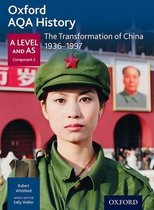
China
Section 3
Revision
Notes
, SECTION 3: Transition to socialism, 1952-1962
The political development of the PRC
End of 1952:
o Economy had been stabilised
o Some social reform implemented
o Political control of the whole of China by CCP had been consolidated
o Apart from mass campaigns CCP proceeded cautiously
o Maintaining a united front approach – working with the national bourgeoisie, the peasants,
& the industrial working class
1953:
o CCP leadership announced the PRC = entering a new stage in development
A transition stage to a socialist society
o It meant that:
China would go through a period of industrialisation and agricultural development
With moves towards a growth in collective ownership of land & industry
o New ‘general line’ = said transition would take about 15 years
o Even though it was radical it promised that:
the united front policy had not been abandoned
Transition would be a gradual process
- Need for central state planning following USSR example of the Five-Year Plans in the 1920s
Leadership Issues:
- Even after this ‘general line’ was adopted = some movement for debate at the top
- The party was based on ‘democratic centralism’ = debate allowed up until a final decision was made
by the Politburo – then everyone had to support it
- Mao = special status as the “Great Helmsman” of the party
- But he was still part of a collective leadership
- He couldn’t always impose his will in all circumstances
- He had to argue his case & win support
HOWEVER…
- He had the power to bring the party into line with his views when he faced challenges
o As shown with the Rectification campaign in 1942 in Yenan
The purge of Gao Gang & Rao Shushi, 1953:
- Late 1953 = 1st major purge of leading CCP figures since the establishment of the PRC
- Gao Gang = leading CCP official in Manchuria in 1949
- Held all 4 senior posts within government, the CCP & the PLA
, - Strong power base = regarded as one of the CCP’s rising stars
- 1952 = became head of the Central Planning Commission = responsible for directing the 1 st 5-year
plan
- Gao took Mao’s side in the debate over the pace of change
- He criticised Zhou Enlai & Liu Shaoqi for their more cautious approach
- Believed he had Mao’s backing, so he tried to usurp Zhou’s position within government
- Deng Xiaoping alerted Mao
- Mao used the December 1953 meeting of the Politburo to accuse Gao of ‘underground activities’ &
attempts to build independent kingdoms
- 1954 – Gao committed suicide rather than face humiliation & disgrace
- Rao (his accomplice) was arrested & died in prison 20 years later
- This demonstrated that there were limits for the scope of debate even at the top
- Mao’s position had been further strengthened
- Other CCP leaders = been reminded that the same could happen to them if they oppose him.
The anti-Hu Feng Campaign, 1955:
- Intellectuals in China = uneasy relationship with CCP
- Most intellectuals came from richer families (landlords & bourgeoisie) due to expensive of
higher education
- Those with university degrees – normally had been educated either abroad or in universities run by
the West
- CCP viewed them with suspicion
BUT…
- They needed educated people’s cooperation if China was to advance economically
- Professionals such as scientists, engineers, doctors, statisticians etc possessed skills essential to a
planned, industrial economy
- Most educated people in China = willing to stay behind & work for the regime
- It offered new opportunities & hope for the future after the corruption of the GMD government
BUT…
- They struggled in this new environment – they had been educated in a tradition of academic
freedom
- New environment = open criticism & freedom of expression = regarded as counterrevolutionary
thought
- Consequences of expressing criticism shown through the case of Hu Feng:
o 1955
o Writer
o Wrote that the CCP’s control over culture had stopped creativity & art
o For this = he was dismissed from the writers’ union
o Charged with being an agent of the GMD
o Imprisoned
o Wasn’t released until 1979
- After this case = a campaign to eradicate ‘Hu Feng elements’ from intellectual life
, - By 1956 = intellectuals had learnt that to express their own opinion = too high a price to pay
- After this = 2000 of Feng’s supporters = criticised & 100 of them were arrested or forced to make
self-criticisms.
Hundred Flowers Campaign (1956 – 1957):
- 1956 = Mao launched a campaign under the slogan “Let a hundred flowers blossom, let a
hundred schools of thought contend”
- Intellectuals should feel able to openly express their criticisms of the CCP & its policies
- Mao was influenced by a number of factors:
o Wanted to speed up the pace of economic change
Targets of Five-Year Plan = achieved a year early
Problems in the attempts to collectivise agriculture
Growing resistance of peasants
Facing opposition from within the Politburo in regard to speeding up the pace of
change
Particularly from Zhou Enlai & Chen Yun
Looking for support outside the party for his more radical approach
o Thought that Party officials were becoming too alienated from the masses
Believed greatest danger facing CCP = growing ‘bureaucratism’
Thought officials = serving the needs of organisations they worked for rather than
the people
Saw the campaign as another ‘rectification’ movement
Officials = subject to criticism from outside the party = would need to mend their
ways
He wanted the criticism to be directed against the party
Expected an endorsement of himself (didn’t think people would criticise him
personally)
o 1956 – Khrushchev’s Secret Speech denunciation of Stalin
Followed by revolts against communism in Poland & Hungary
Profound effect on politics in China
Opposition to Mao:
- Many leading communists (such as Liu Shaoqi) = afraid that if they encouraged criticism from
outside the party that it would undermine the party & threaten the existence of the regime
- Events in Hungary & Poland = convinced Mao’s opponents in the CCP that China needed more strict
controls over debate – not fewer
- 1956 – without the complete support of the Politburo = Mao unable to get his campaign started
- February 1957 – Mao repeated his ‘Let 100 flowers blossom’ speech – this time spread to a much
wider audience
Section 3
Revision
Notes
, SECTION 3: Transition to socialism, 1952-1962
The political development of the PRC
End of 1952:
o Economy had been stabilised
o Some social reform implemented
o Political control of the whole of China by CCP had been consolidated
o Apart from mass campaigns CCP proceeded cautiously
o Maintaining a united front approach – working with the national bourgeoisie, the peasants,
& the industrial working class
1953:
o CCP leadership announced the PRC = entering a new stage in development
A transition stage to a socialist society
o It meant that:
China would go through a period of industrialisation and agricultural development
With moves towards a growth in collective ownership of land & industry
o New ‘general line’ = said transition would take about 15 years
o Even though it was radical it promised that:
the united front policy had not been abandoned
Transition would be a gradual process
- Need for central state planning following USSR example of the Five-Year Plans in the 1920s
Leadership Issues:
- Even after this ‘general line’ was adopted = some movement for debate at the top
- The party was based on ‘democratic centralism’ = debate allowed up until a final decision was made
by the Politburo – then everyone had to support it
- Mao = special status as the “Great Helmsman” of the party
- But he was still part of a collective leadership
- He couldn’t always impose his will in all circumstances
- He had to argue his case & win support
HOWEVER…
- He had the power to bring the party into line with his views when he faced challenges
o As shown with the Rectification campaign in 1942 in Yenan
The purge of Gao Gang & Rao Shushi, 1953:
- Late 1953 = 1st major purge of leading CCP figures since the establishment of the PRC
- Gao Gang = leading CCP official in Manchuria in 1949
- Held all 4 senior posts within government, the CCP & the PLA
, - Strong power base = regarded as one of the CCP’s rising stars
- 1952 = became head of the Central Planning Commission = responsible for directing the 1 st 5-year
plan
- Gao took Mao’s side in the debate over the pace of change
- He criticised Zhou Enlai & Liu Shaoqi for their more cautious approach
- Believed he had Mao’s backing, so he tried to usurp Zhou’s position within government
- Deng Xiaoping alerted Mao
- Mao used the December 1953 meeting of the Politburo to accuse Gao of ‘underground activities’ &
attempts to build independent kingdoms
- 1954 – Gao committed suicide rather than face humiliation & disgrace
- Rao (his accomplice) was arrested & died in prison 20 years later
- This demonstrated that there were limits for the scope of debate even at the top
- Mao’s position had been further strengthened
- Other CCP leaders = been reminded that the same could happen to them if they oppose him.
The anti-Hu Feng Campaign, 1955:
- Intellectuals in China = uneasy relationship with CCP
- Most intellectuals came from richer families (landlords & bourgeoisie) due to expensive of
higher education
- Those with university degrees – normally had been educated either abroad or in universities run by
the West
- CCP viewed them with suspicion
BUT…
- They needed educated people’s cooperation if China was to advance economically
- Professionals such as scientists, engineers, doctors, statisticians etc possessed skills essential to a
planned, industrial economy
- Most educated people in China = willing to stay behind & work for the regime
- It offered new opportunities & hope for the future after the corruption of the GMD government
BUT…
- They struggled in this new environment – they had been educated in a tradition of academic
freedom
- New environment = open criticism & freedom of expression = regarded as counterrevolutionary
thought
- Consequences of expressing criticism shown through the case of Hu Feng:
o 1955
o Writer
o Wrote that the CCP’s control over culture had stopped creativity & art
o For this = he was dismissed from the writers’ union
o Charged with being an agent of the GMD
o Imprisoned
o Wasn’t released until 1979
- After this case = a campaign to eradicate ‘Hu Feng elements’ from intellectual life
, - By 1956 = intellectuals had learnt that to express their own opinion = too high a price to pay
- After this = 2000 of Feng’s supporters = criticised & 100 of them were arrested or forced to make
self-criticisms.
Hundred Flowers Campaign (1956 – 1957):
- 1956 = Mao launched a campaign under the slogan “Let a hundred flowers blossom, let a
hundred schools of thought contend”
- Intellectuals should feel able to openly express their criticisms of the CCP & its policies
- Mao was influenced by a number of factors:
o Wanted to speed up the pace of economic change
Targets of Five-Year Plan = achieved a year early
Problems in the attempts to collectivise agriculture
Growing resistance of peasants
Facing opposition from within the Politburo in regard to speeding up the pace of
change
Particularly from Zhou Enlai & Chen Yun
Looking for support outside the party for his more radical approach
o Thought that Party officials were becoming too alienated from the masses
Believed greatest danger facing CCP = growing ‘bureaucratism’
Thought officials = serving the needs of organisations they worked for rather than
the people
Saw the campaign as another ‘rectification’ movement
Officials = subject to criticism from outside the party = would need to mend their
ways
He wanted the criticism to be directed against the party
Expected an endorsement of himself (didn’t think people would criticise him
personally)
o 1956 – Khrushchev’s Secret Speech denunciation of Stalin
Followed by revolts against communism in Poland & Hungary
Profound effect on politics in China
Opposition to Mao:
- Many leading communists (such as Liu Shaoqi) = afraid that if they encouraged criticism from
outside the party that it would undermine the party & threaten the existence of the regime
- Events in Hungary & Poland = convinced Mao’s opponents in the CCP that China needed more strict
controls over debate – not fewer
- 1956 – without the complete support of the Politburo = Mao unable to get his campaign started
- February 1957 – Mao repeated his ‘Let 100 flowers blossom’ speech – this time spread to a much
wider audience