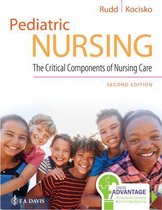
Test Bank - Davis Advantage for Pediatric Nursing: The Critical Components of Nursing Care 2nd Edition
TEST BANK
Davis Advantage for Pediatric Nursing
The Critical Components of Nursing Care
Kathryn Rudd, Diane Kocisko
2nd Edition
, Test Bank - Davis Advantage for Pediatric Nursing: The Critical Components of Nursing Care 2nd Edition
Table of Contents
UNIT 1: PEDIATRIC NURSING: AN OVERVIEW
Chapter 1: Issues and Trends in Pediatric Nursing
Chapter 2: Standards of Practice and Ethical Considerations
UNIT 2: PSYCHO-SOCIAL-CULTURAL ASSESSMENT OF THE CHILD AND THE FAMILY
Chapter 3: Family Dynamics and Communicating with Children and Families
Chapter 4: Cultural, Spiritual, and Environmental Influences on the Child
Chapter 5: End-of-Life Care
UNIT 3: GROWTH AND DEVELOPMENT OF THE CHILD
Chapter 6: Growth and Development
Chapter 7: Newborns and Infants
Chapter 8: Toddlers and Preschoolers
Chapter 9: School-Age Children
Chapter 10: Adolescents
UNIT 4: COMMON ILLNESSES OR DISORDERS IN CHILDHOOD AND HOME CARE
Chapter 11: Respiratory Disorders
Chapter 12: Cardiovascular Disorders
Chapter 13: Neurological and Sensory Disorders
Chapter 14: Mental Health Disorders
Chapter 15: Gastrointestinal Disorders
Chapter 16: Renal Disorders
Chapter 17: Endocrine Disorders
Chapter 18: Reproductive and Genetic Disorders
Chapter 19: Hematological, Immunological, and Neoplastic Disorders
Chapter 20: Musculoskeletal Disorders
Chapter 21: Dermatological Diseases
Chapter 22: Communicable Diseases
, Test Bank - Davis Advantage for Pediatric Nursing: The Critical Components of Nursing Care 2nd Edition
Chapter 1. Issues and Trends in Pediatric Nursing
MULTIPLE CHOICE
1. A nurse is reviewing changes in healthcare delivery and funding for pediatric populations.
Which current trend in the pediatric setting should the nurse expect to find?
a. Increased hospitalization of children
b. Decreased number of uninsured children
c. An increase in ambulatory care
d. Decreased use of managed care
ANS: C
One effect of managed care is that pediatric healthcare delivery has shifted dramatically from
the
acute care setting to the ambulatory setting. The number of hospital beds being used has
decreased as more care is provided in outpatient and home settings. The number of uninsured
children in the United States continues to grow. One of the biggest changes in healthcare has
been the growth of managed care.
DIF: Cognitive Level: Comprehension REF: p. 3
OBJ: Nursing Process Step: Planning MSC: Safe and Effective Care Environment
2. A nurse is referring a low-income family with three children under the age of 5 years to a
program that assists with supplemental food supplies. Which program should the nurse refer
this
family to?
a. Medicaid
b. Medicare
c. Early and Periodic Screening, Diagnostic, and Treatment (EPSDT) program
d. Women, Infants, and Children (WIC) program
ANS: D
WIC is a federal program that provides supplemental food supplies to low-income women
who
are pregnant or breast-feeding and to their children until the age of 5 years. Medicaid and the
, Test Bank - Davis Advantage for Pediatric Nursing: The Critical Components of Nursing Care 2nd Edition
Medicaid Early and Periodic Screening, Diagnostic, and Treatment (EPSDT) program
provides
for well-child examinations and related treatment of medical problems. Children in the WIC
program are often referred for immunizations, but that is not the primary focus of the
program.
Public Law 99-457 provides financial incentives to states to establish comprehensive early
intervention services for infants and toddlers with, or at risk for, developmental disabilities.
Medicare is the program for Senior Citizens.
DIF: Cognitive Level: Application REF: p. 7
OBJ: Nursing Process Step: Implementation
MSC: Health Promotion and Maintenance
3. In most states, adolescents who are not emancipated minors must have parental permission
before:
a. treatment for drug abuse.
b. treatment for sexually transmitted diseases (STDs).
c. obtaining birth control.
d. surgery.
ANS: D
An emancipated minor is a minor child who has the legal competence of an adult. Legal
counsel
may be consulted to verify the status of the emancipated minor for consent purposes. Most
states
allow minors to obtain treatment for drug or alcohol abuse and STDs and allow access to
birth
control without parental consent.
DIF: Cognitive Level: Application REF: p. 12
OBJ: Nursing Process Step: Planning MSC: Safe and Effective Care Environment
4. A nurse is completing a clinical pathway for a child admitted to the hospital with
pneumonia.
Which characteristic of a clinical pathway is correct?
a. Developed and implemented by nurses
b. Used primarily in the pediatric setting
c. Specific time lines for sequencing interventions
d. One of the steps in the nursing process
, Test Bank - Davis Advantage for Pediatric Nursing: The Critical Components of Nursing Care 2nd Edition
ANS: C
Clinical pathways measure outcomes of client care and are developed by multiple healthcare
professionals. Each pathway outlines specific time lines for sequencing interventions and
reflects
interdisciplinary interventions. Clinical pathways are used in multiple settings and for clients
throughout the life span. The steps of the nursing process are assessment, diagnosis, planning,
implementation, and evaluation.
DIF: Cognitive Level: Comprehension REF: p. 6
OBJ: Nursing Process Step: Planning MSC: Safe and Effective Care Environment
5. When planning a parenting class, the nurse should explain that the leading cause of death
in
children 1 to 4 years of age in the United States is:
a. premature birth.
b. congenital anomalies.
c. accidental death.
d. respiratory tract illness.
ANS: C
Accidents are the leading cause of death in children ages 1 to 19 years. Disorders of short
gestation and unspecified low birth weight make up one of the leading causes of death in
neonates. One of the leading causes of infant death after the first month of life is congenital
anomalies. Respiratory tract illnesses are a major cause of morbidity in children.
DIF: Cognitive Level: Application REF: p. 9
OBJ: Nursing Process Step: Implementation
MSC: Safe and Effective Care Environment
6. Which statement is true regarding the quality assurance or incident report?
a. The report assures the legal department that there is no problem.
b. Reports are a permanent part of the clients chart.
c. The nurses notes should contain the following: Incident report filed and copy
placed in chart.
d. This report is a form of documentation of an event that may result in legal action.
ANS: D
An incident report is a warning to the legal department to be prepared for potential legal
action;
it is not a part of the clients chart or nurse documentation.
, Test Bank - Davis Advantage for Pediatric Nursing: The Critical Components of Nursing Care 2nd Edition
DIF: Cognitive Level: Knowledge REF: p. 14
OBJ: Nursing Process Step: Implementation
MSC: Safe and Effective Care Environment
7. Which client situation fails to meet the first requirement of informed consent?
a. The parent does not understand the physicians explanations.
b. The physician gives the parent only a partial list of possible side effects and
complications.
c. No parent is available and the physician asks the adolescent to sign the consent
form.
d. The infants teenage mother signs a consent form because her parent tells her to.
ANS: C
The first requirement of informed consent is that the person giving consent must be
competent.
Minors are not allowed to give consent. An understanding of information, full disclosure, and
voluntary consent are requirements of informed consent, but none of these is the first
requirement.
DIF: Cognitive Level: Comprehension REF: p. 12
OBJ: Nursing Process Step: Implementation
MSC: Safe and Effective Care Environment
8. A nurse assigned to a child does not know how to perform a treatment that has been
prescribed
for the child. What should the nurses first action be?
a. Delay the treatment until another nurse can do it.
b. Make the childs parents aware of the situation.
c. Inform the nursing supervisor of the problem.
d. Arrange to have the child transferred to another unit.
ANS: C
If a nurse is not competent to perform a particular nursing task, the nurse must immediately
communicate this fact to the nursing supervisor or physician. The nurse could endanger the
child
by delaying the intervention until another nurse is available. Telling the childs parents would
most likely increase their anxiety and will not resolve the difficulty. Transfer to another unit
delays needed treatment and would create unnecessary disruption for the child and family.
DIF: Cognitive Level: Application REF: p. 11
, Test Bank - Davis Advantage for Pediatric Nursing: The Critical Components of Nursing Care 2nd Edition
OBJ: Nursing Process Step: Implementation
MSC: Safe and Effective Care Environment
9. A nurse is completing a care plan for a child and is finishing the assessment phase. Which
activity is not part of a nursing assessment?
a. Writing nursing diagnoses
b. Reviewing diagnostic reports
c. Collecting data
d. Setting priorities
ANS: D
Setting priorities is a part of planning. Writing nursing diagnoses, reviewing diagnostic
reports,
and collecting data are parts of assessment.
DIF: Cognitive Level: Comprehension REF: p. 19
OBJ: Nursing Process Step: Planning MSC: Physiological Integrity
10. Which patient outcome is stated correctly?
a. The child will administer his insulin injection before breakfast on 10/31.
b. The child will accept the diagnosis of type 1 diabetes mellitus before discharge.
c. The parents will understand how to determine the childs daily insulin dosage.
d. The nurse will monitor blood glucose levels before meals and at bedtime.
ANS: A
The outcome is stated in client terms, with a measurable verb and a time frame for action.
The
verb accept is difficult to measure. The goal of accepting a diagnosis before hospital
discharge is
unrealistic. Outcomes should be stated in client terms. Nursing actions are determined after
outcomes are developed in the implementation phase of the nursing process.
DIF: Cognitive Level: Application REF: p. 20
OBJ: Nursing Process Step: Planning MSC: Safe and Effective Care Environment
MULTIPLE RESPONSE
1. A nurse is reviewing the nursing care plan for a hospitalized child. Which statements are
collaborative problems? Select all that apply.
a. Risk for injury
b. Potential complication of seizure disorder
, Test Bank - Davis Advantage for Pediatric Nursing: The Critical Components of Nursing Care 2nd Edition
c. Altered nutrition: Less than body requirements
d. Fluid volume deficit
e. Potential complication of respiratory acidosis
ANS: B, E
In addition to nursing diagnoses, which describe problems that respond to independent
nursing
functions, nurses must also deal with problems that are beyond the scope of independent
nursing
practice. These are sometimes termed collaborative problemsphysiological complications
that
usually occur in association with a specific pathological condition or treatment. The potential
complications of seizure disorder and respiratory acidosis are physiological complications
that
will require physician collaboration to treat. Risk for injury, altered nutrition, and fluid
volume
deficit will respond to independent nursing functions.
DIF: Cognitive Level: Application REF: p. 20
OBJ: Nursing Process Step: Planning MSC: Safe and Effective Care Environment
2. Which nursing activities do not meet the standard of care? Select all that apply.
a. Failure to notify a physician about a childs worsening condition
b. Calling the supervisor about staffing concerns
c. Delegating assessment of a new admit to the Unlicensed Assistive Personnel
(UAP)
d. Asking the Unlicensed Assistive Personnel (UAP) to take vital signs
e. Documenting that a physician was unavailable and the nursing supervisor was
notified
ANS: A, C
A nurse who fails to notify a physician about a childs worsening condition and delegating the
assessment of a new admit to a UAP do not meet the standard of care. Calling the supervisor
about staffing concerns, asking the UAP to take vital signs, and documenting that a physician
could not be reached and the nursing supervisor was notified all meet the standard of care.
Chapter 2. Standards of Practice and Ethical Considerations
Multiple Choice
1. Leah is a new graduate nurse and has questions about her scope of practice. The best place
, Test Bank - Davis Advantage for Pediatric Nursing: The Critical Components of Nursing Care 2nd Edition
to
review would be:
1. The code of ethics.
2. The standards of practice and professional performance.
3. The NCLEX exam.
4. The state licensing body.
ANS: 2
Feedback
1.Applies to the accountability and protection for the public
2.Benchmark for quality and accountability to provide professional
guidance
3.This is the basic exam, but it does not give guidance on this matter.
4.The state has rules and regulations, but it is not the source for overall
professional accountability and guidance.
2. The Code of Ethics for Nurses is characterized by all of the following except:
1. It serves as a guide to empower individuals.
2. It upholds ethics, principles, rights, duties and virtues.
3. It is a private statement for nurses only.
4. It is a public statement for nurses and their patients.
ANS: 3
Feedback
1.Part of the Code of Ethics
2.Part of the Code of Ethics
3.The Code of Ethics is not a private statement. It is for the public and
nurses.
4.Part of the Code of Ethics
3. A nurse has discussed the plan of care, asked for parental input, and has spoken with the
doctor about the needs of the family and patient. This nurse is exhibiting which
characteristics of
therapeutic relationships in pediatric medicine?
1. Goals, mutual respect/trust, and advocacy
2. Empowerment, sympathy, and empathy
3. Goals, advocacy, and sympathy
4. Respect/trust, disengagement, and sympathy
, Test Bank - Davis Advantage for Pediatric Nursing: The Critical Components of Nursing Care 2nd Edition
ANS: 1
Feedback
1.The nurse is demonstrating all characteristics listed.
2.The nurse is not demonstrating sympathy or empathy for the patient.
3.The nurse is not demonstrating sympathy for this family.
4.The nurse is not disengaging or providing sympathy for the family.
4. A primary source for the standards of practice for pediatric nurses is:
1. Pediatric Nursing Scope and Standards of Practice.
2. Code of Ethics.
3. Nightingales Pledge.
4. None of the above.
ANS: 1
Feedback
1.Reflects key themes and trends that are relevant to our time and to all
pediatric health care settings, which provide the framework for the
emergence of specific standards.
2.The Code of Ethics in Nursing provides a foundation for nurses and
empowers them as well.
3.The pledge was part of the early Hippocratic Oath.
4.One answer is correct.
5. Sarah is a 4-year-old patient with cystic fibrosis. She has been having increased
hospitalizations and prefers to have Leah as her nurse as an inpatient. Leah has been assigned
to
care for a different set of patients today, yet Sarahs mother insists on having Leah as their
nurse.
Which action would be best for Leah to take with Sarah and her mother?
1. Ignore the situation.
2. Speak to Sarah and her mother to discuss the importance of having another nurse, who also
knows the case, care for her.
3. Let Sarahs mother and Sarah voice their reasoning for wanting Leah, and then explain the
need for Leah to have a different assignment.
4. Let the charge nurse deal with the situation.
ANS: 3
Feedback
TEST BANK
Davis Advantage for Pediatric Nursing
The Critical Components of Nursing Care
Kathryn Rudd, Diane Kocisko
2nd Edition
, Test Bank - Davis Advantage for Pediatric Nursing: The Critical Components of Nursing Care 2nd Edition
Table of Contents
UNIT 1: PEDIATRIC NURSING: AN OVERVIEW
Chapter 1: Issues and Trends in Pediatric Nursing
Chapter 2: Standards of Practice and Ethical Considerations
UNIT 2: PSYCHO-SOCIAL-CULTURAL ASSESSMENT OF THE CHILD AND THE FAMILY
Chapter 3: Family Dynamics and Communicating with Children and Families
Chapter 4: Cultural, Spiritual, and Environmental Influences on the Child
Chapter 5: End-of-Life Care
UNIT 3: GROWTH AND DEVELOPMENT OF THE CHILD
Chapter 6: Growth and Development
Chapter 7: Newborns and Infants
Chapter 8: Toddlers and Preschoolers
Chapter 9: School-Age Children
Chapter 10: Adolescents
UNIT 4: COMMON ILLNESSES OR DISORDERS IN CHILDHOOD AND HOME CARE
Chapter 11: Respiratory Disorders
Chapter 12: Cardiovascular Disorders
Chapter 13: Neurological and Sensory Disorders
Chapter 14: Mental Health Disorders
Chapter 15: Gastrointestinal Disorders
Chapter 16: Renal Disorders
Chapter 17: Endocrine Disorders
Chapter 18: Reproductive and Genetic Disorders
Chapter 19: Hematological, Immunological, and Neoplastic Disorders
Chapter 20: Musculoskeletal Disorders
Chapter 21: Dermatological Diseases
Chapter 22: Communicable Diseases
, Test Bank - Davis Advantage for Pediatric Nursing: The Critical Components of Nursing Care 2nd Edition
Chapter 1. Issues and Trends in Pediatric Nursing
MULTIPLE CHOICE
1. A nurse is reviewing changes in healthcare delivery and funding for pediatric populations.
Which current trend in the pediatric setting should the nurse expect to find?
a. Increased hospitalization of children
b. Decreased number of uninsured children
c. An increase in ambulatory care
d. Decreased use of managed care
ANS: C
One effect of managed care is that pediatric healthcare delivery has shifted dramatically from
the
acute care setting to the ambulatory setting. The number of hospital beds being used has
decreased as more care is provided in outpatient and home settings. The number of uninsured
children in the United States continues to grow. One of the biggest changes in healthcare has
been the growth of managed care.
DIF: Cognitive Level: Comprehension REF: p. 3
OBJ: Nursing Process Step: Planning MSC: Safe and Effective Care Environment
2. A nurse is referring a low-income family with three children under the age of 5 years to a
program that assists with supplemental food supplies. Which program should the nurse refer
this
family to?
a. Medicaid
b. Medicare
c. Early and Periodic Screening, Diagnostic, and Treatment (EPSDT) program
d. Women, Infants, and Children (WIC) program
ANS: D
WIC is a federal program that provides supplemental food supplies to low-income women
who
are pregnant or breast-feeding and to their children until the age of 5 years. Medicaid and the
, Test Bank - Davis Advantage for Pediatric Nursing: The Critical Components of Nursing Care 2nd Edition
Medicaid Early and Periodic Screening, Diagnostic, and Treatment (EPSDT) program
provides
for well-child examinations and related treatment of medical problems. Children in the WIC
program are often referred for immunizations, but that is not the primary focus of the
program.
Public Law 99-457 provides financial incentives to states to establish comprehensive early
intervention services for infants and toddlers with, or at risk for, developmental disabilities.
Medicare is the program for Senior Citizens.
DIF: Cognitive Level: Application REF: p. 7
OBJ: Nursing Process Step: Implementation
MSC: Health Promotion and Maintenance
3. In most states, adolescents who are not emancipated minors must have parental permission
before:
a. treatment for drug abuse.
b. treatment for sexually transmitted diseases (STDs).
c. obtaining birth control.
d. surgery.
ANS: D
An emancipated minor is a minor child who has the legal competence of an adult. Legal
counsel
may be consulted to verify the status of the emancipated minor for consent purposes. Most
states
allow minors to obtain treatment for drug or alcohol abuse and STDs and allow access to
birth
control without parental consent.
DIF: Cognitive Level: Application REF: p. 12
OBJ: Nursing Process Step: Planning MSC: Safe and Effective Care Environment
4. A nurse is completing a clinical pathway for a child admitted to the hospital with
pneumonia.
Which characteristic of a clinical pathway is correct?
a. Developed and implemented by nurses
b. Used primarily in the pediatric setting
c. Specific time lines for sequencing interventions
d. One of the steps in the nursing process
, Test Bank - Davis Advantage for Pediatric Nursing: The Critical Components of Nursing Care 2nd Edition
ANS: C
Clinical pathways measure outcomes of client care and are developed by multiple healthcare
professionals. Each pathway outlines specific time lines for sequencing interventions and
reflects
interdisciplinary interventions. Clinical pathways are used in multiple settings and for clients
throughout the life span. The steps of the nursing process are assessment, diagnosis, planning,
implementation, and evaluation.
DIF: Cognitive Level: Comprehension REF: p. 6
OBJ: Nursing Process Step: Planning MSC: Safe and Effective Care Environment
5. When planning a parenting class, the nurse should explain that the leading cause of death
in
children 1 to 4 years of age in the United States is:
a. premature birth.
b. congenital anomalies.
c. accidental death.
d. respiratory tract illness.
ANS: C
Accidents are the leading cause of death in children ages 1 to 19 years. Disorders of short
gestation and unspecified low birth weight make up one of the leading causes of death in
neonates. One of the leading causes of infant death after the first month of life is congenital
anomalies. Respiratory tract illnesses are a major cause of morbidity in children.
DIF: Cognitive Level: Application REF: p. 9
OBJ: Nursing Process Step: Implementation
MSC: Safe and Effective Care Environment
6. Which statement is true regarding the quality assurance or incident report?
a. The report assures the legal department that there is no problem.
b. Reports are a permanent part of the clients chart.
c. The nurses notes should contain the following: Incident report filed and copy
placed in chart.
d. This report is a form of documentation of an event that may result in legal action.
ANS: D
An incident report is a warning to the legal department to be prepared for potential legal
action;
it is not a part of the clients chart or nurse documentation.
, Test Bank - Davis Advantage for Pediatric Nursing: The Critical Components of Nursing Care 2nd Edition
DIF: Cognitive Level: Knowledge REF: p. 14
OBJ: Nursing Process Step: Implementation
MSC: Safe and Effective Care Environment
7. Which client situation fails to meet the first requirement of informed consent?
a. The parent does not understand the physicians explanations.
b. The physician gives the parent only a partial list of possible side effects and
complications.
c. No parent is available and the physician asks the adolescent to sign the consent
form.
d. The infants teenage mother signs a consent form because her parent tells her to.
ANS: C
The first requirement of informed consent is that the person giving consent must be
competent.
Minors are not allowed to give consent. An understanding of information, full disclosure, and
voluntary consent are requirements of informed consent, but none of these is the first
requirement.
DIF: Cognitive Level: Comprehension REF: p. 12
OBJ: Nursing Process Step: Implementation
MSC: Safe and Effective Care Environment
8. A nurse assigned to a child does not know how to perform a treatment that has been
prescribed
for the child. What should the nurses first action be?
a. Delay the treatment until another nurse can do it.
b. Make the childs parents aware of the situation.
c. Inform the nursing supervisor of the problem.
d. Arrange to have the child transferred to another unit.
ANS: C
If a nurse is not competent to perform a particular nursing task, the nurse must immediately
communicate this fact to the nursing supervisor or physician. The nurse could endanger the
child
by delaying the intervention until another nurse is available. Telling the childs parents would
most likely increase their anxiety and will not resolve the difficulty. Transfer to another unit
delays needed treatment and would create unnecessary disruption for the child and family.
DIF: Cognitive Level: Application REF: p. 11
, Test Bank - Davis Advantage for Pediatric Nursing: The Critical Components of Nursing Care 2nd Edition
OBJ: Nursing Process Step: Implementation
MSC: Safe and Effective Care Environment
9. A nurse is completing a care plan for a child and is finishing the assessment phase. Which
activity is not part of a nursing assessment?
a. Writing nursing diagnoses
b. Reviewing diagnostic reports
c. Collecting data
d. Setting priorities
ANS: D
Setting priorities is a part of planning. Writing nursing diagnoses, reviewing diagnostic
reports,
and collecting data are parts of assessment.
DIF: Cognitive Level: Comprehension REF: p. 19
OBJ: Nursing Process Step: Planning MSC: Physiological Integrity
10. Which patient outcome is stated correctly?
a. The child will administer his insulin injection before breakfast on 10/31.
b. The child will accept the diagnosis of type 1 diabetes mellitus before discharge.
c. The parents will understand how to determine the childs daily insulin dosage.
d. The nurse will monitor blood glucose levels before meals and at bedtime.
ANS: A
The outcome is stated in client terms, with a measurable verb and a time frame for action.
The
verb accept is difficult to measure. The goal of accepting a diagnosis before hospital
discharge is
unrealistic. Outcomes should be stated in client terms. Nursing actions are determined after
outcomes are developed in the implementation phase of the nursing process.
DIF: Cognitive Level: Application REF: p. 20
OBJ: Nursing Process Step: Planning MSC: Safe and Effective Care Environment
MULTIPLE RESPONSE
1. A nurse is reviewing the nursing care plan for a hospitalized child. Which statements are
collaborative problems? Select all that apply.
a. Risk for injury
b. Potential complication of seizure disorder
, Test Bank - Davis Advantage for Pediatric Nursing: The Critical Components of Nursing Care 2nd Edition
c. Altered nutrition: Less than body requirements
d. Fluid volume deficit
e. Potential complication of respiratory acidosis
ANS: B, E
In addition to nursing diagnoses, which describe problems that respond to independent
nursing
functions, nurses must also deal with problems that are beyond the scope of independent
nursing
practice. These are sometimes termed collaborative problemsphysiological complications
that
usually occur in association with a specific pathological condition or treatment. The potential
complications of seizure disorder and respiratory acidosis are physiological complications
that
will require physician collaboration to treat. Risk for injury, altered nutrition, and fluid
volume
deficit will respond to independent nursing functions.
DIF: Cognitive Level: Application REF: p. 20
OBJ: Nursing Process Step: Planning MSC: Safe and Effective Care Environment
2. Which nursing activities do not meet the standard of care? Select all that apply.
a. Failure to notify a physician about a childs worsening condition
b. Calling the supervisor about staffing concerns
c. Delegating assessment of a new admit to the Unlicensed Assistive Personnel
(UAP)
d. Asking the Unlicensed Assistive Personnel (UAP) to take vital signs
e. Documenting that a physician was unavailable and the nursing supervisor was
notified
ANS: A, C
A nurse who fails to notify a physician about a childs worsening condition and delegating the
assessment of a new admit to a UAP do not meet the standard of care. Calling the supervisor
about staffing concerns, asking the UAP to take vital signs, and documenting that a physician
could not be reached and the nursing supervisor was notified all meet the standard of care.
Chapter 2. Standards of Practice and Ethical Considerations
Multiple Choice
1. Leah is a new graduate nurse and has questions about her scope of practice. The best place
, Test Bank - Davis Advantage for Pediatric Nursing: The Critical Components of Nursing Care 2nd Edition
to
review would be:
1. The code of ethics.
2. The standards of practice and professional performance.
3. The NCLEX exam.
4. The state licensing body.
ANS: 2
Feedback
1.Applies to the accountability and protection for the public
2.Benchmark for quality and accountability to provide professional
guidance
3.This is the basic exam, but it does not give guidance on this matter.
4.The state has rules and regulations, but it is not the source for overall
professional accountability and guidance.
2. The Code of Ethics for Nurses is characterized by all of the following except:
1. It serves as a guide to empower individuals.
2. It upholds ethics, principles, rights, duties and virtues.
3. It is a private statement for nurses only.
4. It is a public statement for nurses and their patients.
ANS: 3
Feedback
1.Part of the Code of Ethics
2.Part of the Code of Ethics
3.The Code of Ethics is not a private statement. It is for the public and
nurses.
4.Part of the Code of Ethics
3. A nurse has discussed the plan of care, asked for parental input, and has spoken with the
doctor about the needs of the family and patient. This nurse is exhibiting which
characteristics of
therapeutic relationships in pediatric medicine?
1. Goals, mutual respect/trust, and advocacy
2. Empowerment, sympathy, and empathy
3. Goals, advocacy, and sympathy
4. Respect/trust, disengagement, and sympathy
, Test Bank - Davis Advantage for Pediatric Nursing: The Critical Components of Nursing Care 2nd Edition
ANS: 1
Feedback
1.The nurse is demonstrating all characteristics listed.
2.The nurse is not demonstrating sympathy or empathy for the patient.
3.The nurse is not demonstrating sympathy for this family.
4.The nurse is not disengaging or providing sympathy for the family.
4. A primary source for the standards of practice for pediatric nurses is:
1. Pediatric Nursing Scope and Standards of Practice.
2. Code of Ethics.
3. Nightingales Pledge.
4. None of the above.
ANS: 1
Feedback
1.Reflects key themes and trends that are relevant to our time and to all
pediatric health care settings, which provide the framework for the
emergence of specific standards.
2.The Code of Ethics in Nursing provides a foundation for nurses and
empowers them as well.
3.The pledge was part of the early Hippocratic Oath.
4.One answer is correct.
5. Sarah is a 4-year-old patient with cystic fibrosis. She has been having increased
hospitalizations and prefers to have Leah as her nurse as an inpatient. Leah has been assigned
to
care for a different set of patients today, yet Sarahs mother insists on having Leah as their
nurse.
Which action would be best for Leah to take with Sarah and her mother?
1. Ignore the situation.
2. Speak to Sarah and her mother to discuss the importance of having another nurse, who also
knows the case, care for her.
3. Let Sarahs mother and Sarah voice their reasoning for wanting Leah, and then explain the
need for Leah to have a different assignment.
4. Let the charge nurse deal with the situation.
ANS: 3
Feedback