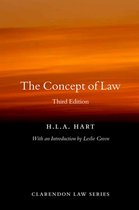
H. L. A. Hart's The Concept of Law is an influential work in legal philosophy that redefined legal
positivism by shifting the focus from law as a series of commands to law as a system of rules.
Below is a summary of the important concepts described in the book as detailed in the sources.
1. Critique of Austin's Command Theory
Hart begins by criticizing John Austin's "command theory," which defined law as orders backed
by threats issued by a sovereign whom the bulk of the population habitually obeys. Hart argues
this "gunman" model fails because it cannot explain:
● The Difference between being "Obliged" and having an "Obligation": One is obliged
to hand over money to a gunman out of fear, but one has a legal obligation to follow a rule
because it is an accepted standard.
● The Persistence of Law: Laws often continue to be valid long after the sovereign who
issued them has died.
● Variety of Laws: Many laws are power-conferring (e.g., rules for making contracts or
wills) rather than duty-imposing (commands).
2. The Union of Primary and Secondary Rules
Hart proposes that a "mature" legal system is the "union" of two types of rules:
● Primary Rules: These impose duties and regulate behavior directly (e.g., criminal laws
against murder or theft).
● Secondary Rules: These are "rules about rules." They specify how primary rules are
created, identified, changed, and enforced.
3. Social Defects and the Need for Secondary Rules
Hart imagines a "primitive" society with only primary rules and identifies three main defects that
secondary rules resolve:
● Uncertainty: There is no clear way to determine which rules are valid. This is cured by
the Rule of Recognition, which provides criteria for legal validity.
● Static Nature: Rules cannot be changed or adapted quickly. This is cured by Rules of
Change, which empower officials to create, amend, or repeal laws.
● Inefficiency: Disputes over whether a rule was broken have no final arbiter. This is cured
by Rules of Adjudication, which empower judges to interpret and apply the law.
4. The Internal and External Points of View
Hart emphasizes that law cannot be understood solely by looking at behavior from the outside.
● External Point of View: The perspective of an observer who simply records regularities
of behavior and the "hostile reaction" (punishment) that follows a breach. This is the view
of the "bad man" who only follows the law to avoid sanctions.
● Internal Point of View: The "critical reflective attitude" held by those who accept the rules
as common standards for the group. From this view, a rule is not just a prediction of
punishment but a reason and justification for action.
5. The Rule of Recognition
positivism by shifting the focus from law as a series of commands to law as a system of rules.
Below is a summary of the important concepts described in the book as detailed in the sources.
1. Critique of Austin's Command Theory
Hart begins by criticizing John Austin's "command theory," which defined law as orders backed
by threats issued by a sovereign whom the bulk of the population habitually obeys. Hart argues
this "gunman" model fails because it cannot explain:
● The Difference between being "Obliged" and having an "Obligation": One is obliged
to hand over money to a gunman out of fear, but one has a legal obligation to follow a rule
because it is an accepted standard.
● The Persistence of Law: Laws often continue to be valid long after the sovereign who
issued them has died.
● Variety of Laws: Many laws are power-conferring (e.g., rules for making contracts or
wills) rather than duty-imposing (commands).
2. The Union of Primary and Secondary Rules
Hart proposes that a "mature" legal system is the "union" of two types of rules:
● Primary Rules: These impose duties and regulate behavior directly (e.g., criminal laws
against murder or theft).
● Secondary Rules: These are "rules about rules." They specify how primary rules are
created, identified, changed, and enforced.
3. Social Defects and the Need for Secondary Rules
Hart imagines a "primitive" society with only primary rules and identifies three main defects that
secondary rules resolve:
● Uncertainty: There is no clear way to determine which rules are valid. This is cured by
the Rule of Recognition, which provides criteria for legal validity.
● Static Nature: Rules cannot be changed or adapted quickly. This is cured by Rules of
Change, which empower officials to create, amend, or repeal laws.
● Inefficiency: Disputes over whether a rule was broken have no final arbiter. This is cured
by Rules of Adjudication, which empower judges to interpret and apply the law.
4. The Internal and External Points of View
Hart emphasizes that law cannot be understood solely by looking at behavior from the outside.
● External Point of View: The perspective of an observer who simply records regularities
of behavior and the "hostile reaction" (punishment) that follows a breach. This is the view
of the "bad man" who only follows the law to avoid sanctions.
● Internal Point of View: The "critical reflective attitude" held by those who accept the rules
as common standards for the group. From this view, a rule is not just a prediction of
punishment but a reason and justification for action.
5. The Rule of Recognition