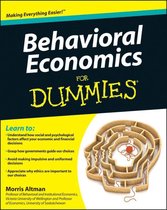
New Economic Realities Summary
Contents
Lectures.................................................................................................................................. 2
Week 1, Intro Neoclassical Assumptions............................................................................2
Week 2, Neoclassical assumptions.....................................................................................4
Week 3, New institutional economics and neoclassical economics.....................................5
Week 4, Behavioural economics and conventional economics...........................................6
Week 5, Prospect theory, heuristics and loss aversion.......................................................9
Week 6, The good economy: how ethical behaviour can grow the economy....................14
Additional Material............................................................................................................ 20
Altmann: Behavioural Economics for Dummies (2012).........................................................29
Chapter 2: Getting Real about Assumptions, p. 19-40......................................................29
Chapter 4: Why Incentives and Markets Matter but Money Isn't Everything, p. 65-88.......33
Chapter 5: Exploring the Limits to Free Choice, p. 91-105................................................38
Chapter 6: Quick and Simple Heuristics and Real-World Decision Making, p. 107- 130...41
Chapter 8: How Norms, Peer, History and Culture Influence Choice, p. 153 – 166...........47
Chapter 13: The Good Economy: How Ethical Behaviour can grow the Economy, p. 229-
239.................................................................................................................................... 50
Chapter 14: Why Institutions Matter, p. 243-255...............................................................54
Misbehaving: The making of behavioural economies by Thaler............................................59
Handbook of Contemporary Behavioural Economics (Altman), Prewritten Summary...........65
Institutions and Economic Theory by Furubotn/Richter (2005).............................................67
Elonor Olstrom.................................................................................................................. 68
Douglas North Video, Effect of Institutions on Market Performance..................................69
The political and moral dimensions of Economics (Chapter 2) – R.D. Johnson....................72
BBC Documentary: How you really make decisions (2014)..................................................75
Thinking, Fast and Slow | Daniel Kahneman | Talks at Google............................................76
Loss Aversion and The Endowment Effect..........................................................................77
Bibliography.......................................................................................................................... 79
,Lectures
Week 1, Intro Neoclassical Assumptions
Schools of thoughts
Goethe: Every school of thoughts is like a man who has talked to himself for a
hundred years and is delighted with his own mind, however stupid it may be.
Pre-Classical: Islamic Economics, Classical: Population Theorists
Game Theory, 2/3 game, rationality (homo economicus vs. common knowledge)
Three pillar model of NER:
1. Theories: neoclassical, institutional, behaviours economics
2. Entities: Institutions, organizational, individual actors, trends
3. Paradigms: Old schools, corporate responsibility, sustainability
Neoclassical economics: Focussing on supply and demand, perfect competitions
assumptions and the rational utility maximiser assumption
Institutional Economics: Institution is not equal organization/institute. Views the evolution
of economics institutions (rules of the game) as part of the broader process of cultural
development
Behavioural Economics: The effects of social, cognitive and emotional factors on
economic decision making are taken into account. Psychology impact
Institution (e.g. market, global trade, banking, education), organization (e.g. WTO,
Microsoft, G20, ECB), Individual actors (e.g. Warren Buffet, Bill Gates, Karl Marx),
Trends (e.g. outsourcing, internationalization, cloud computing)
Paradigm: A way of thinking that determines how one interprets and responds to
situations.
- Old school: the business of business is business
- Corporate responsibility e.g. Ethics, codes of conduct
- Sustainability: Ensuring survival and well-being of future generations, People,
planet, profit
Neo-Classical Assumptions:
Efficient markets, perfect knowledge, preferences are stable and consistent, people have the
same preferences, people have willpower, people have unbounded computational abilities
People always engage in utility maximization, people are rational and solitary decision
makers, people are making the best choices, no errors, people always try to maximize
,wealth and profit, everything is predictive, money and incentives are the only things that
matters
Conventional economic assumption:
Peoples preferences are stable and consistent (orange, pear example)
Example: Behavioural economist: saving for retirement (not everyone is
interested in it), music taste
People are solitary decision makers (past decisions are not relevant)
Behavioural economists: social norms are important
How people form preferences doesn’t matter (these assumptions produce top-notch
decisions)
Behavioural economists: predictions without explanations not very useful,
preferences affected by others
People have the same preferences (representative agent model, black box (household,
firm))
Behavioural economics: conflicting preferences, preference affected by
others), imperial data
People are all maximisers (only wealth maximisers are rational)
Behaviours economists: Satisfying behaviour
Non-maximising behaviour
People have perfect knowledge (unbound knowledge, perfect view of the future, opinion
about past decisions constant)
Behavioural economists: lack of time and resources, educated guesses,
present self vs. future self
People have unbounded computational capabilities (multiplicity of computation for decisions
of their best)
Behavioural economics: bounded rationality, heuristics (rules of thumb)
People have willpower (people make choices they really want to make)
Behavioural economics: making choices that don’t enhance your
happiness or well-being
, People are capable of acting upon their preferences (choices reveal true wants and desires)
Behavioural economists: are those conditions present for people to make
the preferred choices?
Behavioural economic person: how people behave in the real world, best decisions
experienced based, bounded rationality, (repeated) mistakes, selfish or selfless, affected by
environment and social norms, affected by past behaviour, influenced by
institutions/prices/income
Prisoner’s dilemma: Standard example of a game analysed in game theory that shows
why two completely rational individuals might not cooperate, even if it appears that it is
in their best interests to do so. Each prisoner is in solitary confinement with no means of
communicating with the other. “Nash equilibrium”: A is worse off when B is worse off,
ending up in equal years of time.
Week 2, Neoclassical
assumptions
Neo-classical assumptions
• Efficient markets
• Perfect knowledge
• Preferences are stable and
consistent
• People have the same preferences
• People have willpower
• People have unbounded computational abilities
• People always engage in utility maximization
• People are rational and solitary decision maker
Contents
Lectures.................................................................................................................................. 2
Week 1, Intro Neoclassical Assumptions............................................................................2
Week 2, Neoclassical assumptions.....................................................................................4
Week 3, New institutional economics and neoclassical economics.....................................5
Week 4, Behavioural economics and conventional economics...........................................6
Week 5, Prospect theory, heuristics and loss aversion.......................................................9
Week 6, The good economy: how ethical behaviour can grow the economy....................14
Additional Material............................................................................................................ 20
Altmann: Behavioural Economics for Dummies (2012).........................................................29
Chapter 2: Getting Real about Assumptions, p. 19-40......................................................29
Chapter 4: Why Incentives and Markets Matter but Money Isn't Everything, p. 65-88.......33
Chapter 5: Exploring the Limits to Free Choice, p. 91-105................................................38
Chapter 6: Quick and Simple Heuristics and Real-World Decision Making, p. 107- 130...41
Chapter 8: How Norms, Peer, History and Culture Influence Choice, p. 153 – 166...........47
Chapter 13: The Good Economy: How Ethical Behaviour can grow the Economy, p. 229-
239.................................................................................................................................... 50
Chapter 14: Why Institutions Matter, p. 243-255...............................................................54
Misbehaving: The making of behavioural economies by Thaler............................................59
Handbook of Contemporary Behavioural Economics (Altman), Prewritten Summary...........65
Institutions and Economic Theory by Furubotn/Richter (2005).............................................67
Elonor Olstrom.................................................................................................................. 68
Douglas North Video, Effect of Institutions on Market Performance..................................69
The political and moral dimensions of Economics (Chapter 2) – R.D. Johnson....................72
BBC Documentary: How you really make decisions (2014)..................................................75
Thinking, Fast and Slow | Daniel Kahneman | Talks at Google............................................76
Loss Aversion and The Endowment Effect..........................................................................77
Bibliography.......................................................................................................................... 79
,Lectures
Week 1, Intro Neoclassical Assumptions
Schools of thoughts
Goethe: Every school of thoughts is like a man who has talked to himself for a
hundred years and is delighted with his own mind, however stupid it may be.
Pre-Classical: Islamic Economics, Classical: Population Theorists
Game Theory, 2/3 game, rationality (homo economicus vs. common knowledge)
Three pillar model of NER:
1. Theories: neoclassical, institutional, behaviours economics
2. Entities: Institutions, organizational, individual actors, trends
3. Paradigms: Old schools, corporate responsibility, sustainability
Neoclassical economics: Focussing on supply and demand, perfect competitions
assumptions and the rational utility maximiser assumption
Institutional Economics: Institution is not equal organization/institute. Views the evolution
of economics institutions (rules of the game) as part of the broader process of cultural
development
Behavioural Economics: The effects of social, cognitive and emotional factors on
economic decision making are taken into account. Psychology impact
Institution (e.g. market, global trade, banking, education), organization (e.g. WTO,
Microsoft, G20, ECB), Individual actors (e.g. Warren Buffet, Bill Gates, Karl Marx),
Trends (e.g. outsourcing, internationalization, cloud computing)
Paradigm: A way of thinking that determines how one interprets and responds to
situations.
- Old school: the business of business is business
- Corporate responsibility e.g. Ethics, codes of conduct
- Sustainability: Ensuring survival and well-being of future generations, People,
planet, profit
Neo-Classical Assumptions:
Efficient markets, perfect knowledge, preferences are stable and consistent, people have the
same preferences, people have willpower, people have unbounded computational abilities
People always engage in utility maximization, people are rational and solitary decision
makers, people are making the best choices, no errors, people always try to maximize
,wealth and profit, everything is predictive, money and incentives are the only things that
matters
Conventional economic assumption:
Peoples preferences are stable and consistent (orange, pear example)
Example: Behavioural economist: saving for retirement (not everyone is
interested in it), music taste
People are solitary decision makers (past decisions are not relevant)
Behavioural economists: social norms are important
How people form preferences doesn’t matter (these assumptions produce top-notch
decisions)
Behavioural economists: predictions without explanations not very useful,
preferences affected by others
People have the same preferences (representative agent model, black box (household,
firm))
Behavioural economics: conflicting preferences, preference affected by
others), imperial data
People are all maximisers (only wealth maximisers are rational)
Behaviours economists: Satisfying behaviour
Non-maximising behaviour
People have perfect knowledge (unbound knowledge, perfect view of the future, opinion
about past decisions constant)
Behavioural economists: lack of time and resources, educated guesses,
present self vs. future self
People have unbounded computational capabilities (multiplicity of computation for decisions
of their best)
Behavioural economics: bounded rationality, heuristics (rules of thumb)
People have willpower (people make choices they really want to make)
Behavioural economics: making choices that don’t enhance your
happiness or well-being
, People are capable of acting upon their preferences (choices reveal true wants and desires)
Behavioural economists: are those conditions present for people to make
the preferred choices?
Behavioural economic person: how people behave in the real world, best decisions
experienced based, bounded rationality, (repeated) mistakes, selfish or selfless, affected by
environment and social norms, affected by past behaviour, influenced by
institutions/prices/income
Prisoner’s dilemma: Standard example of a game analysed in game theory that shows
why two completely rational individuals might not cooperate, even if it appears that it is
in their best interests to do so. Each prisoner is in solitary confinement with no means of
communicating with the other. “Nash equilibrium”: A is worse off when B is worse off,
ending up in equal years of time.
Week 2, Neoclassical
assumptions
Neo-classical assumptions
• Efficient markets
• Perfect knowledge
• Preferences are stable and
consistent
• People have the same preferences
• People have willpower
• People have unbounded computational abilities
• People always engage in utility maximization
• People are rational and solitary decision maker