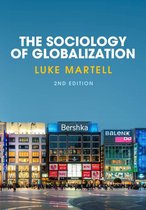
Hybridization is within homogenization and Westernization
Sceptics of the globalization of culture look at economics and its relation with power and
inequality
Global media corporations are not global, but still very powerful
Inclusivity/integration of production/distribution of culture is very unequal
Culture is related to power and economics
|
Big corporations, technological changes and deregulation can cause monopolization
In the modern capitalist era, culture became mass and global due to technological advances
Postmodern technological advances expanded on this, sped it up, but did nothing entirely new
Power, inequality, economy and modern capitalism are focal aspects of the globalization of
culture and media
H5 Global Migration; inequality and history
The economic basis of migration shows the inequality of it
Mobility of people is quite restricted and unequal
Causes/types of migration
Different types
- Permitted/not permitted
o Governments decide what is allowed
o Illegal immigration due to inequalities between nations and because legal ways
are restricted
- Voluntary/forced
o Forced-> traffickers, debt traps, false pretenses
o Still 20-50 million people in slavery today
o Refugees, environmental, development forced eviction, conflicts
- Smaller/larger scale
o Is it only the rich elites or all sorts of people?
o How far is the migration? How many countries are included?
- Permanent/temporary
, o Does it involve citizenship or changing identities?
o Short labor period? Students? Tourists?
- Labor/economic
o Can be all of the abovementioned types
o Post-war migration from colonies to the colonizing powers for work
o Looking for better conditions
o In Eu there were mostly temporary migrants
- Refugees/asylum seekers
Media overhypes the number of refugees and creates animosity and dangerous situations in
host countries
|
Refugees flee mostly to neighboring (often poor) countries
Since the Syria conflict (2011) mostly since 2013, there was an increase in asylum seekers
Most of them received by Germany/US/Sweden
|
Still, marginal numbers compared to the wealth and size of the countries
In 2015, 15 million refugees (half from Syria and Afghanistan)
75% hosted in Africa, Asia, Middle-East, 15% in Europe, 7% in Americas
Denmark/Netherlands/Sweden approve most applications
Greece/France/Italy/UK most denied
Only 6% of refugees from Syria went to Europe
Host most per 1000 residents-> Lebanon, Jordan, Chad
Conclusions
- The main burden of taking care of the world’s refugees is borne well outside the core of
rich countries in the world
- Amongst the rich countries some are more willing to help refugees than others
- Rich countries that take a lot of asylum seekers do not always turn that into giving a
majority of them refugee status
Continuing with types
- Family reunion or chain migration
o Migration leads to further migration
o Largest category of European migration flow
o Example of a “migration system” (enabler of migration)
, Migration systems
- Postcolonial links
o Moving labor/trade in between colony and colonizer
- Geography/proximity
o Transport is cheaper/easier
o Changed with technological developments
- Technology of communication
o Gaining knowledge about destination
o Potentially glamorized image of destination
o Maintaining relationships
- Political factors
o Border control
Economic causes of migration
The facilitating of globalization by governments or states can be economically motivated, to
find labor or contribute to production and growth
|
Economy does not have to be determinant
“Globalization can be economically driven but by agents rather than impersonal structural
forces, and by actors outside the economy, such as political actors”
- Economic motivations, rather than the economy as key factor
- Economic explanations allow agency because of the motivations-> are not determinants
- Economic motivations can be held by non-economic actors
o Governments, households, social capital
- No need for individual rational economic actor assumptions
o Groups, and other factors are also at play-> not basic economic rationality
- Economic gain is not a sufficient determinant of migration
o Subjective perception plays a large role
o Complex causes do not exclude economic motivations
- Economic motivations are filtered through factors like political obstacles to migration
and networks that facilitate/restrict migration
o Is it easy? Far? Dangerous?
o Economic motivation must be made possible
- At the level of individuals or households there are different circumstances in the face of
economic motivation
o Even if the same motivations/advantages exist, household circumstances affect
the decision
- Even if economic motivations aren’t the primary incentive, it may be the underlying
cause of what is
Sceptics of the globalization of culture look at economics and its relation with power and
inequality
Global media corporations are not global, but still very powerful
Inclusivity/integration of production/distribution of culture is very unequal
Culture is related to power and economics
|
Big corporations, technological changes and deregulation can cause monopolization
In the modern capitalist era, culture became mass and global due to technological advances
Postmodern technological advances expanded on this, sped it up, but did nothing entirely new
Power, inequality, economy and modern capitalism are focal aspects of the globalization of
culture and media
H5 Global Migration; inequality and history
The economic basis of migration shows the inequality of it
Mobility of people is quite restricted and unequal
Causes/types of migration
Different types
- Permitted/not permitted
o Governments decide what is allowed
o Illegal immigration due to inequalities between nations and because legal ways
are restricted
- Voluntary/forced
o Forced-> traffickers, debt traps, false pretenses
o Still 20-50 million people in slavery today
o Refugees, environmental, development forced eviction, conflicts
- Smaller/larger scale
o Is it only the rich elites or all sorts of people?
o How far is the migration? How many countries are included?
- Permanent/temporary
, o Does it involve citizenship or changing identities?
o Short labor period? Students? Tourists?
- Labor/economic
o Can be all of the abovementioned types
o Post-war migration from colonies to the colonizing powers for work
o Looking for better conditions
o In Eu there were mostly temporary migrants
- Refugees/asylum seekers
Media overhypes the number of refugees and creates animosity and dangerous situations in
host countries
|
Refugees flee mostly to neighboring (often poor) countries
Since the Syria conflict (2011) mostly since 2013, there was an increase in asylum seekers
Most of them received by Germany/US/Sweden
|
Still, marginal numbers compared to the wealth and size of the countries
In 2015, 15 million refugees (half from Syria and Afghanistan)
75% hosted in Africa, Asia, Middle-East, 15% in Europe, 7% in Americas
Denmark/Netherlands/Sweden approve most applications
Greece/France/Italy/UK most denied
Only 6% of refugees from Syria went to Europe
Host most per 1000 residents-> Lebanon, Jordan, Chad
Conclusions
- The main burden of taking care of the world’s refugees is borne well outside the core of
rich countries in the world
- Amongst the rich countries some are more willing to help refugees than others
- Rich countries that take a lot of asylum seekers do not always turn that into giving a
majority of them refugee status
Continuing with types
- Family reunion or chain migration
o Migration leads to further migration
o Largest category of European migration flow
o Example of a “migration system” (enabler of migration)
, Migration systems
- Postcolonial links
o Moving labor/trade in between colony and colonizer
- Geography/proximity
o Transport is cheaper/easier
o Changed with technological developments
- Technology of communication
o Gaining knowledge about destination
o Potentially glamorized image of destination
o Maintaining relationships
- Political factors
o Border control
Economic causes of migration
The facilitating of globalization by governments or states can be economically motivated, to
find labor or contribute to production and growth
|
Economy does not have to be determinant
“Globalization can be economically driven but by agents rather than impersonal structural
forces, and by actors outside the economy, such as political actors”
- Economic motivations, rather than the economy as key factor
- Economic explanations allow agency because of the motivations-> are not determinants
- Economic motivations can be held by non-economic actors
o Governments, households, social capital
- No need for individual rational economic actor assumptions
o Groups, and other factors are also at play-> not basic economic rationality
- Economic gain is not a sufficient determinant of migration
o Subjective perception plays a large role
o Complex causes do not exclude economic motivations
- Economic motivations are filtered through factors like political obstacles to migration
and networks that facilitate/restrict migration
o Is it easy? Far? Dangerous?
o Economic motivation must be made possible
- At the level of individuals or households there are different circumstances in the face of
economic motivation
o Even if the same motivations/advantages exist, household circumstances affect
the decision
- Even if economic motivations aren’t the primary incentive, it may be the underlying
cause of what is