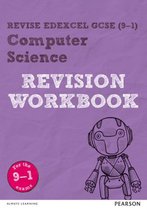
REVISE EDEXCEL GCSE (9–1)
Computer
Science
REVISION
WORKBOOK
or the
F
9–1
exa ms
,REVISE EDEXCEL GCSE (9–1)
Computer Science
REVISION
WORKBOOK
Series Consultant: Harry Smith
Author: David Waller
Notes from the publisher
While the publishers have made every attempt to ensure that advice on the
qualification and its assessment is accurate, the official specification and
associated assessment guidance materials are the only authoritative source
of information and should always be referred to for definitive guidance.
Pearson examiners have not contributed to any sections in this resource
relevant to examination papers for which they have responsibility.
Question difficulty
Look at this scale next to
each exam-style question.
It tells you how difficult the
question is.
For the full range of Pearson revision titles across KS2,
KS3, GCSE, Functional Skills, AS/A Level and BTEC visit:
www.pearsonschools.co.uk/revise
, 1-to-1
Contents
page
matc
h wit
Com h the
p uter
Revis Scien
ion G ce
ISBN
u i d e
Problem-solving Computers 97812
92131
207
1 Algorithms 47 Input–processing–output
2 Algorithms: pseudo-code 48 The central processing unit
3 Algorithms: flowcharts 49 Components of the CPU
4 Purpose of an algorithm 50 Fetch–decode–execute cycle
5 Completing algorithms 51 Memory
6 Interpreting correct output 52 Magnetic and optical storage
7 Using trace tables 53 Solid-state memory
8 Identifying and correcting errors 54 Cloud storage
9 Linear search 55 Embedded systems
10 Binary search 56 Logic
11 Comparing linear and binary searches 57 Logic circuits
12 Bubble sort 58 Operating system 1
13 Merge sort 59 Operating system 2
14 Decomposition and abstraction 60 Utility software 1
61 Utility software 2
Programming 62 Simulation and modelling
15 Variables and constants 63 Programming languages
16 Arithmetic operators 64 Translators
17 Relational operators
18 Logical operators
Communication and the internet
65 LANs and WANs
19 Selection
66 Client–server and peer-to-peer networks
20 Iteration
67 Wired and wireless connectivity
21 Data types
68 Connecting computers to a LAN
22 String manipulation
69 Data transmission
23 Arrays
70 Protocols
24 File handling operations
71 Network topologies 1
25 Records
72 Network topologies 2
26 Subprograms 1
73 Network security 1
27 Subprograms 2
74 Network security 2
28 Validation
75 Cyberattacks
29 Testing and test plans
76 Identifying vulnerabilities
77 Protecting software systems
Data
78 The internet
30 Using binary
79 The world wide web
31 Converting from denary to binary
32 Converting from binary to denary and binaryaddition The bigger picture
33 Logical shifts 80 Environmental issues
34 Signed integers 81 Ethical impact
35 Arithmetic shifts 82 Privacy issues
36 Hexadecimal and binary 83 Legislation
37 Characters 84 Proprietary and open-source software
38 Bitmap images
39 Sound 85 Practice paper 1
40 Units 93 Practice Paper 2
41 Data compression
104 Answers
42 Run-length encoding
43 Encryption
A small bit of small print
44 Structured and unstructured data Edexcel publishes Sample Assessment Material and the
45 Attributes and tables Specification on its website. This is the official content
46 Relational databases and this book should be used in conjunction with it. The
questions have been written to help you practise every
topic in the book. Remember: the real exam questions
may not look like this.
ii
Computer
Science
REVISION
WORKBOOK
or the
F
9–1
exa ms
,REVISE EDEXCEL GCSE (9–1)
Computer Science
REVISION
WORKBOOK
Series Consultant: Harry Smith
Author: David Waller
Notes from the publisher
While the publishers have made every attempt to ensure that advice on the
qualification and its assessment is accurate, the official specification and
associated assessment guidance materials are the only authoritative source
of information and should always be referred to for definitive guidance.
Pearson examiners have not contributed to any sections in this resource
relevant to examination papers for which they have responsibility.
Question difficulty
Look at this scale next to
each exam-style question.
It tells you how difficult the
question is.
For the full range of Pearson revision titles across KS2,
KS3, GCSE, Functional Skills, AS/A Level and BTEC visit:
www.pearsonschools.co.uk/revise
, 1-to-1
Contents
page
matc
h wit
Com h the
p uter
Revis Scien
ion G ce
ISBN
u i d e
Problem-solving Computers 97812
92131
207
1 Algorithms 47 Input–processing–output
2 Algorithms: pseudo-code 48 The central processing unit
3 Algorithms: flowcharts 49 Components of the CPU
4 Purpose of an algorithm 50 Fetch–decode–execute cycle
5 Completing algorithms 51 Memory
6 Interpreting correct output 52 Magnetic and optical storage
7 Using trace tables 53 Solid-state memory
8 Identifying and correcting errors 54 Cloud storage
9 Linear search 55 Embedded systems
10 Binary search 56 Logic
11 Comparing linear and binary searches 57 Logic circuits
12 Bubble sort 58 Operating system 1
13 Merge sort 59 Operating system 2
14 Decomposition and abstraction 60 Utility software 1
61 Utility software 2
Programming 62 Simulation and modelling
15 Variables and constants 63 Programming languages
16 Arithmetic operators 64 Translators
17 Relational operators
18 Logical operators
Communication and the internet
65 LANs and WANs
19 Selection
66 Client–server and peer-to-peer networks
20 Iteration
67 Wired and wireless connectivity
21 Data types
68 Connecting computers to a LAN
22 String manipulation
69 Data transmission
23 Arrays
70 Protocols
24 File handling operations
71 Network topologies 1
25 Records
72 Network topologies 2
26 Subprograms 1
73 Network security 1
27 Subprograms 2
74 Network security 2
28 Validation
75 Cyberattacks
29 Testing and test plans
76 Identifying vulnerabilities
77 Protecting software systems
Data
78 The internet
30 Using binary
79 The world wide web
31 Converting from denary to binary
32 Converting from binary to denary and binaryaddition The bigger picture
33 Logical shifts 80 Environmental issues
34 Signed integers 81 Ethical impact
35 Arithmetic shifts 82 Privacy issues
36 Hexadecimal and binary 83 Legislation
37 Characters 84 Proprietary and open-source software
38 Bitmap images
39 Sound 85 Practice paper 1
40 Units 93 Practice Paper 2
41 Data compression
104 Answers
42 Run-length encoding
43 Encryption
A small bit of small print
44 Structured and unstructured data Edexcel publishes Sample Assessment Material and the
45 Attributes and tables Specification on its website. This is the official content
46 Relational databases and this book should be used in conjunction with it. The
questions have been written to help you practise every
topic in the book. Remember: the real exam questions
may not look like this.
ii