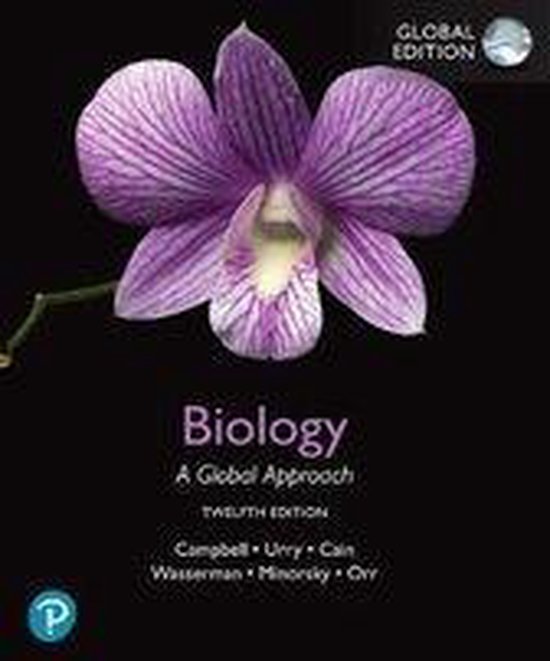
Comprehensive midterm exam study guide
On: Genes, Cells & Evolution
126 questions and answers
Year: 2024
University of Queensland
Basis: Biology 12th - A Global Approach, Global Edition Neil A. Campbell
9781292341637 Pearson
,Contents
Introduction to Biology.....................................................................................................................................................3
Biological Evolution..........................................................................................................................................................3
Cells and Their Functions..................................................................................................................................................3
Genetic Information...........................................................................................................................................................4
Macromolecules: Carbohydrates, Lipids, Proteins, and Enzymes.....................................................................................4
Metabolism and Energy.....................................................................................................................................................4
.......................................................................................................................................................................................... 4
Cellular Respiration...........................................................................................................................................................5
8. Photosynthesis...............................................................................................................................................................5
9. Cell Division................................................................................................................................................................. 5
10. The Cytoskeleton.........................................................................................................................................................5
11. DNA Structure and Replication...................................................................................................................................6
12. RNA and Protein Synthesis.........................................................................................................................................6
13. Enzymes and Biochemical Reactions..........................................................................................................................7
14. Cellular Respiration.....................................................................................................................................................7
15. Photosynthesis.............................................................................................................................................................8
16. Metabolism..................................................................................................................................................................8
17. Cell Division................................................................................................................................................................ 8
18. Prokaryotic vs. Eukaryotic Cells..................................................................................................................................9
19. Organelles and Cellular Structures..............................................................................................................................9
20. Plasma Membrane and Transport..............................................................................................................................10
21. Bacteria and Archaea.................................................................................................................................................10
22. Metabolism and Thermodynamics.............................................................................................................................11
23. Photosynthesis...........................................................................................................................................................12
24. DNA Repair and Mutations.......................................................................................................................................12
25. Key Experiments in Genetics....................................................................................................................................12
,Introduction to Biology
1. What are the key unifying elements of life on Earth?
o Structural order, need for energy, and ability to reproduce.
2. Who is considered the father of taxonomy?
o Aristotle.
3. What system did Carl Linnaeus develop?
o Binomial nomenclature and taxonomic hierarchies based on morphology.
Biological Evolution
4. What is biological evolution?
o A process resulting in heritable changes in populations over time.
5. What is Darwin's theory of evolution?
o Species evolve through natural selection and share common ancestors.
6. What are homologies, and why are they important in evolution?
o Structural similarities due to shared ancestry, highlighting evolutionary
conservation.
Cells and Their Functions
7. What are the two main types of cells?
o Prokaryotes (no nucleus) and eukaryotes (with a nucleus).
8. What is the primary structural component of the cell membrane?
o Lipid bilayer.
9. Name three differences between bacterial and eukaryotic cells.
o DNA location, organelles, and cell size.
, Genetic Information
10.What are the key molecules involved in storing and transmitting genetic
information?
o DNA and RNA.
11.How are DNA strands held together?
o By weak hydrogen bonds between complementary base pairs (A-T, C-G).
12.What is transcription?
o The process of copying DNA into mRNA.
13.What is translation?
o mRNA is used to assemble amino acids into proteins.
Macromolecules: Carbohydrates, Lipids, Proteins, and Enzymes
14.What are the building blocks of carbohydrates?
o Monosaccharides.
15.How are polymers formed from monomers?
o Through dehydration reactions.
16.What are triglycerides composed of?
o Glycerol and three fatty acid chains.
17.What is the role of enzymes in biological systems?
o Catalyzing chemical reactions by lowering activation energy.
Metabolism and Energy
18.What are the two types of metabolic processes?
o Catabolism (breakdown of molecules) and anabolism (synthesis of molecules).
19.What is ATP, and why is it important?
o Adenosine triphosphate, the main energy currency of cells.
20.What are the stages of cellular respiration?
o Glycolysis, Krebs cycle, and oxidative phosphorylation.
On: Genes, Cells & Evolution
126 questions and answers
Year: 2024
University of Queensland
Basis: Biology 12th - A Global Approach, Global Edition Neil A. Campbell
9781292341637 Pearson
,Contents
Introduction to Biology.....................................................................................................................................................3
Biological Evolution..........................................................................................................................................................3
Cells and Their Functions..................................................................................................................................................3
Genetic Information...........................................................................................................................................................4
Macromolecules: Carbohydrates, Lipids, Proteins, and Enzymes.....................................................................................4
Metabolism and Energy.....................................................................................................................................................4
.......................................................................................................................................................................................... 4
Cellular Respiration...........................................................................................................................................................5
8. Photosynthesis...............................................................................................................................................................5
9. Cell Division................................................................................................................................................................. 5
10. The Cytoskeleton.........................................................................................................................................................5
11. DNA Structure and Replication...................................................................................................................................6
12. RNA and Protein Synthesis.........................................................................................................................................6
13. Enzymes and Biochemical Reactions..........................................................................................................................7
14. Cellular Respiration.....................................................................................................................................................7
15. Photosynthesis.............................................................................................................................................................8
16. Metabolism..................................................................................................................................................................8
17. Cell Division................................................................................................................................................................ 8
18. Prokaryotic vs. Eukaryotic Cells..................................................................................................................................9
19. Organelles and Cellular Structures..............................................................................................................................9
20. Plasma Membrane and Transport..............................................................................................................................10
21. Bacteria and Archaea.................................................................................................................................................10
22. Metabolism and Thermodynamics.............................................................................................................................11
23. Photosynthesis...........................................................................................................................................................12
24. DNA Repair and Mutations.......................................................................................................................................12
25. Key Experiments in Genetics....................................................................................................................................12
,Introduction to Biology
1. What are the key unifying elements of life on Earth?
o Structural order, need for energy, and ability to reproduce.
2. Who is considered the father of taxonomy?
o Aristotle.
3. What system did Carl Linnaeus develop?
o Binomial nomenclature and taxonomic hierarchies based on morphology.
Biological Evolution
4. What is biological evolution?
o A process resulting in heritable changes in populations over time.
5. What is Darwin's theory of evolution?
o Species evolve through natural selection and share common ancestors.
6. What are homologies, and why are they important in evolution?
o Structural similarities due to shared ancestry, highlighting evolutionary
conservation.
Cells and Their Functions
7. What are the two main types of cells?
o Prokaryotes (no nucleus) and eukaryotes (with a nucleus).
8. What is the primary structural component of the cell membrane?
o Lipid bilayer.
9. Name three differences between bacterial and eukaryotic cells.
o DNA location, organelles, and cell size.
, Genetic Information
10.What are the key molecules involved in storing and transmitting genetic
information?
o DNA and RNA.
11.How are DNA strands held together?
o By weak hydrogen bonds between complementary base pairs (A-T, C-G).
12.What is transcription?
o The process of copying DNA into mRNA.
13.What is translation?
o mRNA is used to assemble amino acids into proteins.
Macromolecules: Carbohydrates, Lipids, Proteins, and Enzymes
14.What are the building blocks of carbohydrates?
o Monosaccharides.
15.How are polymers formed from monomers?
o Through dehydration reactions.
16.What are triglycerides composed of?
o Glycerol and three fatty acid chains.
17.What is the role of enzymes in biological systems?
o Catalyzing chemical reactions by lowering activation energy.
Metabolism and Energy
18.What are the two types of metabolic processes?
o Catabolism (breakdown of molecules) and anabolism (synthesis of molecules).
19.What is ATP, and why is it important?
o Adenosine triphosphate, the main energy currency of cells.
20.What are the stages of cellular respiration?
o Glycolysis, Krebs cycle, and oxidative phosphorylation.