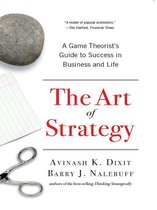
GAME THEORY
Unit 1
INTRODUCTION:
1.1 GAME:
A game is a structured activity with rules and goals that people play for
fun or to learn. Games can be played by individuals or teams, online or in
person.
1.1.1 DEFINITION:
A game is a system where players compete in a defined conflict that results
in a quantifiable outcome
A game is a form of art where players use game tokens to manage resources
and achieve a goal
A game is an exercise of voluntary control systems where there is an
opposition between forces
1.1.2 TYPES OF GAMES:
Board games like chess, war games, and jigsaw puzzles
Video games played on consoles, PCs, or mobile devices
Spectator sports like football
Online games
Page 1
,1.2 GAME THEORY
Game theory is the study of mathematical models of strategic interaction
among rational decision-makers. It has applications in all fields of social
science, as well as in logic, science and computer science. Originally, it
addressed zero-sum games, in which each participant‟s gains or losses are
exactly balanced by those of the other participants. Today, game theory applies
to a wide range of behavioural relations, and is now an umbrella term for the
science of logical decision making in humans, animals, and computers.
Game theory is the formal study of conflict, competition and cooperation.
Game theoretic concepts apply whenever the actions of several agents are
interdependent. These agents may be individuals, groups, firms, or any
combination of these. The concepts of game theory provide a language to
formulate, structure, analyse, and understand strategic scenarios. As a
mathematical tool for the decision-maker the strength of game theory is the
methodology it provides for structuring and analysing problems of strategic
choice. The process of formally modelling a situation as a game requires the
decision-maker to enumerate explicitly the players and their strategic options,
and to consider their preferences and reactions. The discipline involved in
constructing such a model already has the potential of providing the decision-
maker with a clearer and broader view of the situation. This is a “prescriptive”
application of game theory, with the goal of improved strategic decision
making.
Page 2
,1.3 HISTORY OF GAME THEORY
1.3.1 STRATEGIC INDEPENDENCE
Emil Borel wrote a series of papers between 1921 and 1927 where he set
out to investigate whether it is possible to determine a method of play that
is better than all other. This method of play is a code that determines for
every possible circumstance exactly what the person should do.
1.3.2 JOV VON NEUMANN
Jon von Newmann was a Hungarian mathematician.
By 26, he had already published 32 papers.
He has been credited with founding game theory based on a paper he
wrote in 1928.
In 1944, he wrote, alongside Oskar Morgestern, the seminal book Theory
of Games and Economic Behavior.
Jon von Newmann developed the first electronic computer while working
on the Manhattan Project.
1.3.3 JOHN FORBES NASH JR.
John Nash started as a mathematics graduate student at Princeton in 1948.
He submitted a paper to the Proceedings of the National Academy of
Sciences in 1949, where he proved that an equilibrium exists in every
game.
Jon von Newmann‟s remark was: That‟s trivial you know, That‟s just a
fixed-point theorem…
Page 3
, 1.4 ASSUMPTIONS OF THE GAME
1. There are finite numbers of competitors.
2. There is conflict of interests between them.
3. Each player has available with him finite numbers of possible strategies
(courses of action). The list may not be the same for each player.
4. One player attempts to maximize gains and the other attempts to
minimize losses.
5. Players know all possible available choices but do not know which one is
going to be chosen.
6. Players simultaneously select their respective courses of action.
7. The payoff is fixed and determined in advance.
8. Players have to make individual decisions without direct communication.
Page 4
Unit 1
INTRODUCTION:
1.1 GAME:
A game is a structured activity with rules and goals that people play for
fun or to learn. Games can be played by individuals or teams, online or in
person.
1.1.1 DEFINITION:
A game is a system where players compete in a defined conflict that results
in a quantifiable outcome
A game is a form of art where players use game tokens to manage resources
and achieve a goal
A game is an exercise of voluntary control systems where there is an
opposition between forces
1.1.2 TYPES OF GAMES:
Board games like chess, war games, and jigsaw puzzles
Video games played on consoles, PCs, or mobile devices
Spectator sports like football
Online games
Page 1
,1.2 GAME THEORY
Game theory is the study of mathematical models of strategic interaction
among rational decision-makers. It has applications in all fields of social
science, as well as in logic, science and computer science. Originally, it
addressed zero-sum games, in which each participant‟s gains or losses are
exactly balanced by those of the other participants. Today, game theory applies
to a wide range of behavioural relations, and is now an umbrella term for the
science of logical decision making in humans, animals, and computers.
Game theory is the formal study of conflict, competition and cooperation.
Game theoretic concepts apply whenever the actions of several agents are
interdependent. These agents may be individuals, groups, firms, or any
combination of these. The concepts of game theory provide a language to
formulate, structure, analyse, and understand strategic scenarios. As a
mathematical tool for the decision-maker the strength of game theory is the
methodology it provides for structuring and analysing problems of strategic
choice. The process of formally modelling a situation as a game requires the
decision-maker to enumerate explicitly the players and their strategic options,
and to consider their preferences and reactions. The discipline involved in
constructing such a model already has the potential of providing the decision-
maker with a clearer and broader view of the situation. This is a “prescriptive”
application of game theory, with the goal of improved strategic decision
making.
Page 2
,1.3 HISTORY OF GAME THEORY
1.3.1 STRATEGIC INDEPENDENCE
Emil Borel wrote a series of papers between 1921 and 1927 where he set
out to investigate whether it is possible to determine a method of play that
is better than all other. This method of play is a code that determines for
every possible circumstance exactly what the person should do.
1.3.2 JOV VON NEUMANN
Jon von Newmann was a Hungarian mathematician.
By 26, he had already published 32 papers.
He has been credited with founding game theory based on a paper he
wrote in 1928.
In 1944, he wrote, alongside Oskar Morgestern, the seminal book Theory
of Games and Economic Behavior.
Jon von Newmann developed the first electronic computer while working
on the Manhattan Project.
1.3.3 JOHN FORBES NASH JR.
John Nash started as a mathematics graduate student at Princeton in 1948.
He submitted a paper to the Proceedings of the National Academy of
Sciences in 1949, where he proved that an equilibrium exists in every
game.
Jon von Newmann‟s remark was: That‟s trivial you know, That‟s just a
fixed-point theorem…
Page 3
, 1.4 ASSUMPTIONS OF THE GAME
1. There are finite numbers of competitors.
2. There is conflict of interests between them.
3. Each player has available with him finite numbers of possible strategies
(courses of action). The list may not be the same for each player.
4. One player attempts to maximize gains and the other attempts to
minimize losses.
5. Players know all possible available choices but do not know which one is
going to be chosen.
6. Players simultaneously select their respective courses of action.
7. The payoff is fixed and determined in advance.
8. Players have to make individual decisions without direct communication.
Page 4