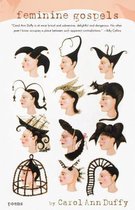
Duff y’s agenda is to challenge the objecti fi cati on of women through her collecti on
Feminine Gospels. 25/25
It is unquestionable that Duffy should touch upon the objectification of women in her anthology
‘Feminine Gospels’; intrinsically involved in the life of every and any woman, this universal concept is
discussed in the modern era especially by female poets with varying degrees of disgust, spite, and
arguably, admiration. In her poem of four parts, ‘Beautiful’, Duffy touches upon the four tragically
afflicted lives of historically iconic figures, reflecting on the idea that beauty is inherently linked to
fame, and objectification to tragedy. Equally, in ‘The Diet’, she is keen to expose the excruciating
pressures that are imposed upon the everyday woman in order to conform to the conventional
standards of beauty.
Certainly, the idea that Duffy’s agenda is to challenge the objectification of women is well-founded
in her poetry; she is critical of society, vocal in her disgust, despising of unreachable expectations
and the notions of male entitlement. As ‘Beautiful’ first begins to unveil the mythologised beauty of
Helen of Troy, ideas of purity, chastity and grace are conveyed through imagery of ‘fair’ innocence:
her untouched sanctity is represented by a ‘pearly’, a ‘peach’, ripe for the male taking. Here, Duffy
comments on the obsessive and condescending patriarchal demand for virginity in women – a
concept born centuries go, and inexplicably relevant today – as Helen is distanced from the bloody
mess of human childbirth, emerging cleanly from an egg (which may also refer to the perceived and
idolised fragility of femininity), and subsequently becomes revered for her purity and ethereal
beauty. Bound by the restricted role of women in society, Helen and the universal woman’s
attributes of intelligence, talent, and personality are disregarded in favour of divine chastity.
This archaic and chivalric description is ‘polluted’ by colloquialisms of modern day – ‘a stunner’,
‘celebrity’, ‘pin up’, ‘superstar’ – aiding the strong links Duffy draws between her beautiful women
across time. Perhaps her primary criticism of the act of objectification is that these women (Helen of
Troy, Marilyn Monroe, Princess Diana) discussed in ‘Beautiful’ are adored, but not permitted to
adore; their sexuality is only accepted within the bounds of male fantasy, unable to be claimed as
their own right. There is an inescapable obligation for the public appearance of such famous women,
who become synonymous by their mistreatment and objectification – the use of imperatives ‘Be
mine, ‘put on the mink’, ‘get in the studio car’, ‘Act like a fucking princess’ and ‘Give us a smile cunt’
, used across the poem easily connote the strain of expectations that women are expected to meet
without question. Duffy presents to us in crude language the entitlement of society, particularly
men, to witness the female body – to ‘stare and stare and stare’ – and most importantly, fantasise.
Marilyn Monroe’s ‘sleepy, startled’ innocence that ‘breathes the script out in a little voice’ is
irreversibly and unconsensually made pornographic. Duffy portrays her to be principally defined in
her public image as something commodified; she is to be photographed (‘the camera loved her’),
over-sexualised and over-produced (‘they filmed her famous, they filmed her beautiful’, ‘greased-up
lens’), to her own detriment. The ignorance and disregard of female suffering to serve the male gaze
is obvious in Marilyn’s final stanza: heavy alliteration of the consonant ‘d’, ‘deep, dumped’, and also
the fragmentation created by constant punctuation and caesuras (‘filmed more, quiet please, action,
cut, quiet please, action, cut…’) as she is edited and preened, reveals the relentless torture women
endure, their dignity stripped, as an audience ‘drools’. Similarly, in ‘The Diet’, objectification is linked
with death (‘guns for hips’) and a removal from the sympathy of the patriarchy – these women are
‘nobody’s love’, forever ‘Half a stone/shy’ from self and societal approval.
As Duffy moves to the conclusion of ‘Beautiful’, the change to vulgar and aggressive language is not
only her representation of the horrific and impolite demands of society, but arguably telling of her
agenda – a seething frustration and anger at the objectification of women permeates the closing line
‘History’s stinking breath in her face’. However, in ‘The Diet’, Duffy is suggestively cold and callous,
adopting an aphoristic tone that manages to criticise society for unrealistic and unreasoned
expectations, as well as the women weak enough to conform to them. She condemns the naivety of
dieting women in surreal states of mind through figurative and fantastical language – ‘the diet
worked like a dream’, ‘child-sized, doll-sized, the height of a thimble’, ‘seed small’, ‘she could fly’ –
and sarcastically congratulates the progression of anorexia, each pound lost, through the fast pace
of internal rhymes (‘dinner, thinner’), and listed dynamic verbs lacking clumsy conjunctives to
emphasise the speed of the diet’s transformation (‘shrinking, skipping’ and ‘starved on, stayed in,
stared in’). Duffy falters in her sympathy for ‘Anorexia’s true daughter’ disappointed that a woman
would sacrifice her relevance and being – as well as fundamental health (‘no sugar, salt, dairy, fat,
protein, starch or alcohol’) – for conventional, dictated beauty. This relates strongly to the
contemporary early millennia feminist argument that women are required to occupy less space as
they are insignificant to society, establishing flesh as a commodity that women are not permitted to
possess.
Feminine Gospels. 25/25
It is unquestionable that Duffy should touch upon the objectification of women in her anthology
‘Feminine Gospels’; intrinsically involved in the life of every and any woman, this universal concept is
discussed in the modern era especially by female poets with varying degrees of disgust, spite, and
arguably, admiration. In her poem of four parts, ‘Beautiful’, Duffy touches upon the four tragically
afflicted lives of historically iconic figures, reflecting on the idea that beauty is inherently linked to
fame, and objectification to tragedy. Equally, in ‘The Diet’, she is keen to expose the excruciating
pressures that are imposed upon the everyday woman in order to conform to the conventional
standards of beauty.
Certainly, the idea that Duffy’s agenda is to challenge the objectification of women is well-founded
in her poetry; she is critical of society, vocal in her disgust, despising of unreachable expectations
and the notions of male entitlement. As ‘Beautiful’ first begins to unveil the mythologised beauty of
Helen of Troy, ideas of purity, chastity and grace are conveyed through imagery of ‘fair’ innocence:
her untouched sanctity is represented by a ‘pearly’, a ‘peach’, ripe for the male taking. Here, Duffy
comments on the obsessive and condescending patriarchal demand for virginity in women – a
concept born centuries go, and inexplicably relevant today – as Helen is distanced from the bloody
mess of human childbirth, emerging cleanly from an egg (which may also refer to the perceived and
idolised fragility of femininity), and subsequently becomes revered for her purity and ethereal
beauty. Bound by the restricted role of women in society, Helen and the universal woman’s
attributes of intelligence, talent, and personality are disregarded in favour of divine chastity.
This archaic and chivalric description is ‘polluted’ by colloquialisms of modern day – ‘a stunner’,
‘celebrity’, ‘pin up’, ‘superstar’ – aiding the strong links Duffy draws between her beautiful women
across time. Perhaps her primary criticism of the act of objectification is that these women (Helen of
Troy, Marilyn Monroe, Princess Diana) discussed in ‘Beautiful’ are adored, but not permitted to
adore; their sexuality is only accepted within the bounds of male fantasy, unable to be claimed as
their own right. There is an inescapable obligation for the public appearance of such famous women,
who become synonymous by their mistreatment and objectification – the use of imperatives ‘Be
mine, ‘put on the mink’, ‘get in the studio car’, ‘Act like a fucking princess’ and ‘Give us a smile cunt’
, used across the poem easily connote the strain of expectations that women are expected to meet
without question. Duffy presents to us in crude language the entitlement of society, particularly
men, to witness the female body – to ‘stare and stare and stare’ – and most importantly, fantasise.
Marilyn Monroe’s ‘sleepy, startled’ innocence that ‘breathes the script out in a little voice’ is
irreversibly and unconsensually made pornographic. Duffy portrays her to be principally defined in
her public image as something commodified; she is to be photographed (‘the camera loved her’),
over-sexualised and over-produced (‘they filmed her famous, they filmed her beautiful’, ‘greased-up
lens’), to her own detriment. The ignorance and disregard of female suffering to serve the male gaze
is obvious in Marilyn’s final stanza: heavy alliteration of the consonant ‘d’, ‘deep, dumped’, and also
the fragmentation created by constant punctuation and caesuras (‘filmed more, quiet please, action,
cut, quiet please, action, cut…’) as she is edited and preened, reveals the relentless torture women
endure, their dignity stripped, as an audience ‘drools’. Similarly, in ‘The Diet’, objectification is linked
with death (‘guns for hips’) and a removal from the sympathy of the patriarchy – these women are
‘nobody’s love’, forever ‘Half a stone/shy’ from self and societal approval.
As Duffy moves to the conclusion of ‘Beautiful’, the change to vulgar and aggressive language is not
only her representation of the horrific and impolite demands of society, but arguably telling of her
agenda – a seething frustration and anger at the objectification of women permeates the closing line
‘History’s stinking breath in her face’. However, in ‘The Diet’, Duffy is suggestively cold and callous,
adopting an aphoristic tone that manages to criticise society for unrealistic and unreasoned
expectations, as well as the women weak enough to conform to them. She condemns the naivety of
dieting women in surreal states of mind through figurative and fantastical language – ‘the diet
worked like a dream’, ‘child-sized, doll-sized, the height of a thimble’, ‘seed small’, ‘she could fly’ –
and sarcastically congratulates the progression of anorexia, each pound lost, through the fast pace
of internal rhymes (‘dinner, thinner’), and listed dynamic verbs lacking clumsy conjunctives to
emphasise the speed of the diet’s transformation (‘shrinking, skipping’ and ‘starved on, stayed in,
stared in’). Duffy falters in her sympathy for ‘Anorexia’s true daughter’ disappointed that a woman
would sacrifice her relevance and being – as well as fundamental health (‘no sugar, salt, dairy, fat,
protein, starch or alcohol’) – for conventional, dictated beauty. This relates strongly to the
contemporary early millennia feminist argument that women are required to occupy less space as
they are insignificant to society, establishing flesh as a commodity that women are not permitted to
possess.