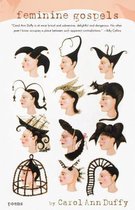
‘Feminine Gospels is an interrogati on of contemporary culture.’
Discuss. 24/25
Poetry has historically represented an intellectual’s inquisition into the norms and deviances of
society. Often taking the form of political, religious, feminist propaganda, poetry has criticised and
analysed acts of sexuality, religion, and subjugation – a medium which Poet Laureate Carol Ann Duffy
chooses to equally address society. Presenting the ‘Gospel truth’ of the female experience, her
narrative poems aim to reveal intimate details of women’s lives, giving a voice to those who have
been typically ‘voiceless’, and entailing discussion on the most sensitive, prevalent, and ignored
topics. Equally criticising the objectification and passivity of women, Duffy interrogates the norms
and naiveties of contemporary society, but also returns to age-old tales to comment on the
excruciating pressures that women have historically experienced.
The scathing tone of ‘Beautiful’, the central poem of the collection, perhaps most accurately
embodies Duffy’s feelings towards society. Passionately questioning society’s obsessive and
objective agenda, she vocalises her disgust at the damaging stereotypes women are marginalised to.
Duffy utilises vulgar and severe language to depict the cruel and apathetic demands of society that
ruthlessly reduce dynamic and empowered women with harsh imperatives to submit to the whims
and desires of onlookers: ‘give us a smile cunt’, ‘act like a fucking princess’, ‘put on the mink’, ‘get in
the studio car’. Her perception of their treatment of women is exemplified in her retellings of the
stories of Marilyn Monroe and Princess Diana, presenting the media as deliberately cruel,
disregardful, and dehumanising. A seething frustration underlies each line in which these women are
depicted as the objects and possessions of the public, something they are entitled to witness,
control, ‘stare and stare and stare’, and fantasise. The wilful ignorance that society adopts when
unconsensually editing Marilyn Monroe’s image to a pornographic doll (‘filmed her famous, filmed
her beautiful’) carries Duffy’s loud disgust, condemning the primitive lust of the global audience that
‘whooped’, ‘swooned’, and ‘drooled’. Over-sexualisation exudes from each image Duffy creates, a
perverted version of femininity created by the ‘greased-up lens’ and male gaze to gratify and satisfy
the salivating public. As such sensuality is achieved, Marilyn Monroe’s identity is erased under
‘painted’ beauty ‘in beige, pinks, blues’, irreversibly commodified to her own detriment. Female
suffering is powerfully demonstrated through the heavy alliteration of the consonant ‘d’ (‘deep,
dumped’), her identity and stability splintering, as paralleled by language fractured by frequent
Discuss. 24/25
Poetry has historically represented an intellectual’s inquisition into the norms and deviances of
society. Often taking the form of political, religious, feminist propaganda, poetry has criticised and
analysed acts of sexuality, religion, and subjugation – a medium which Poet Laureate Carol Ann Duffy
chooses to equally address society. Presenting the ‘Gospel truth’ of the female experience, her
narrative poems aim to reveal intimate details of women’s lives, giving a voice to those who have
been typically ‘voiceless’, and entailing discussion on the most sensitive, prevalent, and ignored
topics. Equally criticising the objectification and passivity of women, Duffy interrogates the norms
and naiveties of contemporary society, but also returns to age-old tales to comment on the
excruciating pressures that women have historically experienced.
The scathing tone of ‘Beautiful’, the central poem of the collection, perhaps most accurately
embodies Duffy’s feelings towards society. Passionately questioning society’s obsessive and
objective agenda, she vocalises her disgust at the damaging stereotypes women are marginalised to.
Duffy utilises vulgar and severe language to depict the cruel and apathetic demands of society that
ruthlessly reduce dynamic and empowered women with harsh imperatives to submit to the whims
and desires of onlookers: ‘give us a smile cunt’, ‘act like a fucking princess’, ‘put on the mink’, ‘get in
the studio car’. Her perception of their treatment of women is exemplified in her retellings of the
stories of Marilyn Monroe and Princess Diana, presenting the media as deliberately cruel,
disregardful, and dehumanising. A seething frustration underlies each line in which these women are
depicted as the objects and possessions of the public, something they are entitled to witness,
control, ‘stare and stare and stare’, and fantasise. The wilful ignorance that society adopts when
unconsensually editing Marilyn Monroe’s image to a pornographic doll (‘filmed her famous, filmed
her beautiful’) carries Duffy’s loud disgust, condemning the primitive lust of the global audience that
‘whooped’, ‘swooned’, and ‘drooled’. Over-sexualisation exudes from each image Duffy creates, a
perverted version of femininity created by the ‘greased-up lens’ and male gaze to gratify and satisfy
the salivating public. As such sensuality is achieved, Marilyn Monroe’s identity is erased under
‘painted’ beauty ‘in beige, pinks, blues’, irreversibly commodified to her own detriment. Female
suffering is powerfully demonstrated through the heavy alliteration of the consonant ‘d’ (‘deep,
dumped’), her identity and stability splintering, as paralleled by language fractured by frequent