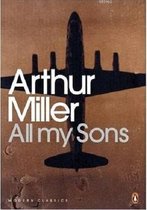
English A: Language and Literature HL
May 2025
Line of Inquiry: To what extent does Arthur Miller in the play "All My Sons" effectively utilize
contrast and symbolic meaning to depict how Joe Keller’s identity was shaped by his moral
decision-making and societal expectations?
Arthur Miller’s All My Sons
Candidate Code: kgq267
Word Count: 1487
, Arthur Miller (1915-2005), a prominent American playwright known for his profound and
socially conscious works, often delved into themes of morality, personal responsibility, and
the American Dream (Encyclopedia Britannica). “All My Sons" (1947) is no exception, as it
captures how societal expectations and moral integrity came to clash in American society post
the Second World War. Joe Keller, a father and businessman, has run a manufacturing factory for
50 years but as the war set in, the production switched from household machinery to war
equipment. With high demands in short time spans, Keller makes the moral compromise of
shipping defective parts that resulted in the death of 21 pilots in WW2, underscoring the tension
between ambition and responsibility. To explore the impact of this dichotomy on Keller’s
identity, Miller employs the use of contrast and powerful symbols revealing how Keller’s pursuit
of the American Dream leads to devastating consequences for his conscience and relationships.
Initially through exploring the theme of responsibility towards family, Miller conveys the
significance money holds in Keller’s life as he strives to build a better future for his son, Chris.
This is exemplified in his willingness to ship defective airplane parts, revealing the extent to
which he prioritizes his role as a provider and businessman over his ethical responsibilities such
as ensuring product safety, maintaining trust with customers, taking accountability for his
decisions, and contributing positively to society. Keller states: “Because what the hell did I work
for? That's only for you, Chris, the whole shootin' match is for you!”(Miller 41) Keller’s action,
however, brings to light the theme of being disloyal towards one’s country. This juxtaposition
between loyalty towards family and dishonesty towards society highlights how his ambition to
secure financial stability for his family clashes with the devastating consequences of his
decisions. The tension created through the contrasting themes depicts the moral and ethical
dilemmas inherent in those in pursuit of the American Dream. Miller, hence, challenges the
audience to grapple with the values they might make under societal pressures.
Furthermore, through juxtaposing Keller’s ignorance with Chris’s principled nature, Miller
exposes Keller’s perspective; a worldview grounded in self-preservation where financial success
justifies moral compromises. In contrast, Chris embodies the pursuit of a higher moral standard,
valuing integrity, adherence to ethical values and collective responsibility. This is evident in his
conversation with Joe about Larry, the Kellers' eldest son, who enlisted in the war and has been
missing for three years.“Chris: Being dishonest with her. That kind of thing always pays off, and
now it's paying off. Keller: What do you mean, dishonest? Chris: You know Larry's not coming
back and I know it. Why do we allow her to go on thinking that we believe with her? Keller:
What do you want to do, argue with her?” (Miller 14). Chris argues that it is wrong to
perpetuate false hope by allowing Kate, the mother, to believe Larry will return, despite the
overwhelming evidence to the contrary. Through this thematic contrast, Miller evokes sympathy
and discomfort in the audience as they understand Keller’s and his son’s characters.
However, as the play progresses, Miller explores the themes of guilt and moral responsibility
against material success and apathy towards human life which comes to shape Keller’s mindset.
1
May 2025
Line of Inquiry: To what extent does Arthur Miller in the play "All My Sons" effectively utilize
contrast and symbolic meaning to depict how Joe Keller’s identity was shaped by his moral
decision-making and societal expectations?
Arthur Miller’s All My Sons
Candidate Code: kgq267
Word Count: 1487
, Arthur Miller (1915-2005), a prominent American playwright known for his profound and
socially conscious works, often delved into themes of morality, personal responsibility, and
the American Dream (Encyclopedia Britannica). “All My Sons" (1947) is no exception, as it
captures how societal expectations and moral integrity came to clash in American society post
the Second World War. Joe Keller, a father and businessman, has run a manufacturing factory for
50 years but as the war set in, the production switched from household machinery to war
equipment. With high demands in short time spans, Keller makes the moral compromise of
shipping defective parts that resulted in the death of 21 pilots in WW2, underscoring the tension
between ambition and responsibility. To explore the impact of this dichotomy on Keller’s
identity, Miller employs the use of contrast and powerful symbols revealing how Keller’s pursuit
of the American Dream leads to devastating consequences for his conscience and relationships.
Initially through exploring the theme of responsibility towards family, Miller conveys the
significance money holds in Keller’s life as he strives to build a better future for his son, Chris.
This is exemplified in his willingness to ship defective airplane parts, revealing the extent to
which he prioritizes his role as a provider and businessman over his ethical responsibilities such
as ensuring product safety, maintaining trust with customers, taking accountability for his
decisions, and contributing positively to society. Keller states: “Because what the hell did I work
for? That's only for you, Chris, the whole shootin' match is for you!”(Miller 41) Keller’s action,
however, brings to light the theme of being disloyal towards one’s country. This juxtaposition
between loyalty towards family and dishonesty towards society highlights how his ambition to
secure financial stability for his family clashes with the devastating consequences of his
decisions. The tension created through the contrasting themes depicts the moral and ethical
dilemmas inherent in those in pursuit of the American Dream. Miller, hence, challenges the
audience to grapple with the values they might make under societal pressures.
Furthermore, through juxtaposing Keller’s ignorance with Chris’s principled nature, Miller
exposes Keller’s perspective; a worldview grounded in self-preservation where financial success
justifies moral compromises. In contrast, Chris embodies the pursuit of a higher moral standard,
valuing integrity, adherence to ethical values and collective responsibility. This is evident in his
conversation with Joe about Larry, the Kellers' eldest son, who enlisted in the war and has been
missing for three years.“Chris: Being dishonest with her. That kind of thing always pays off, and
now it's paying off. Keller: What do you mean, dishonest? Chris: You know Larry's not coming
back and I know it. Why do we allow her to go on thinking that we believe with her? Keller:
What do you want to do, argue with her?” (Miller 14). Chris argues that it is wrong to
perpetuate false hope by allowing Kate, the mother, to believe Larry will return, despite the
overwhelming evidence to the contrary. Through this thematic contrast, Miller evokes sympathy
and discomfort in the audience as they understand Keller’s and his son’s characters.
However, as the play progresses, Miller explores the themes of guilt and moral responsibility
against material success and apathy towards human life which comes to shape Keller’s mindset.
1