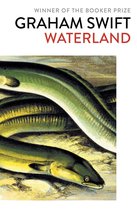
WATERLAND
• Philosophical implications of world wars.
• Idea of historical progress- emerged with the enlightenment- the idea that the world
will reach a state of perfection/ harmony. (traced in Atkinsons) (1)
– The conflicts of the 18thc and 19thc fought for the principles of the
enlightenment- need to remove obstacles in the pursuit of progress. E.g.
French Revolution overthrew Ancien Regime for pursuit of Liberty.
– E.g. Napoleonic Wars- justified in name of progress. But in Br- seen as a
threat to progress- legitimised retaliation.
• BUT WWI and WWII were different- they cant be justified with enlightenment values.
***War now seen as a pursuit of power, land, and wealth***
– WWI showed that civilisation could lapse back into primitivism, savagery, and
violence. (2)
– Rationalism led to scientific advancements> weapons > violence.
• SO the enlightenment idea of PROGRESS collapses- Waterland follows this historical
narrative- look at ch.9.
• The Atkinson’s follow this idea of progress. They start as Barley farmers then expand
> gradually increasing their position and prestige > in the name of progress.
• Tom Crick is sceptical of this historical narrative and has an optimistic vision of the
future.
***WWI will be a seismic shock to the rhetoric of progress- a break with 19thc sentiments***:
– Does he see what the future will bring? Does he see that the fate of the future
(my father’s and my own, early twentieth-century present […]) will be only to
lament and wearily explain the loss of his confident sentiments. (pp. 93-94)
– WWI= the original traumatic event of the 20thc. Plus- it continually drags later
generations into its midst:
– Who will not know the mud of Flanders? Who will not feel in this twentieth
century of ours […] the mud of Flanders sucking at his feet? (p. 19)
• Ernest Atkinson (Crick’s grandfather)- sees the impending war- stands as a liberal
candidate- But the people don’t believe him. Ernest retreats into life as a recluse.
Opens Kessling Hall as a hospital for war veterans BUT develops an unhealthy
sexual attraction to his daughter Helen- thinks their child would be the saviour of the
world >>>> a grotesque miscalculation >>>>> articulates the disillusionment of
theories of progress.
• ‘DE LA REVOLUTION’- in dialogue with Walter Benjamin’s ‘On the Concept of
History’. Benjamin- an associate of the Franklin school. His texts arose from a
moment of intense European history.
– Ch. 14 echoes of Benjamin’s theories.
It cannot be denied, children, that the great so-called forward movements of civilization,
whether moral or technological, have invariably brought with them an accompanying
retrogression. That the dissemination of Christian tenets over a supposedly barbarous world
has been throughout the history of Europe – to say nothing of missionary zeal elsewhere –
one of the prime causes of wars, butcheries, inquisitions and other forms of barbarity. That
the discovery of the printing press led, likewise, as well as to the spreading of knowledge, to
propaganda, mendacity, contention, and strife. That the invention of the steam-engine led to
the miseries of industrial exploitation and to ten-year-olds working sixteen hours a day in coal
mines. That the invention of the aeroplane led to the widespread destruction of European
cities along with their civilian populations during the period 1939 to ’45 (here I can offer you
my twofold eye-witness account: the nightly flights of bombers from East Anglian bases from
1941 onwards; the ruins of Cologne, Düsseldorf and Essen).
And as for the splitting of the atom – (pp. 135-36)
Cf. Walter Benjamin:
‘There is no document of civilization which is not at the same time a document of barbarism.’
• Philosophical implications of world wars.
• Idea of historical progress- emerged with the enlightenment- the idea that the world
will reach a state of perfection/ harmony. (traced in Atkinsons) (1)
– The conflicts of the 18thc and 19thc fought for the principles of the
enlightenment- need to remove obstacles in the pursuit of progress. E.g.
French Revolution overthrew Ancien Regime for pursuit of Liberty.
– E.g. Napoleonic Wars- justified in name of progress. But in Br- seen as a
threat to progress- legitimised retaliation.
• BUT WWI and WWII were different- they cant be justified with enlightenment values.
***War now seen as a pursuit of power, land, and wealth***
– WWI showed that civilisation could lapse back into primitivism, savagery, and
violence. (2)
– Rationalism led to scientific advancements> weapons > violence.
• SO the enlightenment idea of PROGRESS collapses- Waterland follows this historical
narrative- look at ch.9.
• The Atkinson’s follow this idea of progress. They start as Barley farmers then expand
> gradually increasing their position and prestige > in the name of progress.
• Tom Crick is sceptical of this historical narrative and has an optimistic vision of the
future.
***WWI will be a seismic shock to the rhetoric of progress- a break with 19thc sentiments***:
– Does he see what the future will bring? Does he see that the fate of the future
(my father’s and my own, early twentieth-century present […]) will be only to
lament and wearily explain the loss of his confident sentiments. (pp. 93-94)
– WWI= the original traumatic event of the 20thc. Plus- it continually drags later
generations into its midst:
– Who will not know the mud of Flanders? Who will not feel in this twentieth
century of ours […] the mud of Flanders sucking at his feet? (p. 19)
• Ernest Atkinson (Crick’s grandfather)- sees the impending war- stands as a liberal
candidate- But the people don’t believe him. Ernest retreats into life as a recluse.
Opens Kessling Hall as a hospital for war veterans BUT develops an unhealthy
sexual attraction to his daughter Helen- thinks their child would be the saviour of the
world >>>> a grotesque miscalculation >>>>> articulates the disillusionment of
theories of progress.
• ‘DE LA REVOLUTION’- in dialogue with Walter Benjamin’s ‘On the Concept of
History’. Benjamin- an associate of the Franklin school. His texts arose from a
moment of intense European history.
– Ch. 14 echoes of Benjamin’s theories.
It cannot be denied, children, that the great so-called forward movements of civilization,
whether moral or technological, have invariably brought with them an accompanying
retrogression. That the dissemination of Christian tenets over a supposedly barbarous world
has been throughout the history of Europe – to say nothing of missionary zeal elsewhere –
one of the prime causes of wars, butcheries, inquisitions and other forms of barbarity. That
the discovery of the printing press led, likewise, as well as to the spreading of knowledge, to
propaganda, mendacity, contention, and strife. That the invention of the steam-engine led to
the miseries of industrial exploitation and to ten-year-olds working sixteen hours a day in coal
mines. That the invention of the aeroplane led to the widespread destruction of European
cities along with their civilian populations during the period 1939 to ’45 (here I can offer you
my twofold eye-witness account: the nightly flights of bombers from East Anglian bases from
1941 onwards; the ruins of Cologne, Düsseldorf and Essen).
And as for the splitting of the atom – (pp. 135-36)
Cf. Walter Benjamin:
‘There is no document of civilization which is not at the same time a document of barbarism.’