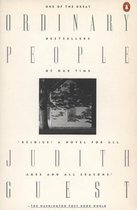
Ordinary people
A. The book
Guest, Judith. Ordinary people. New York, 1976.
B. The author
The author is Judith Guest, she wrote more books. A few
examples are:
- Second Heaven
- Errands
- The tarnished Eye
C. The contents
1. The themes of the book are family, guilt and coming of age. Family because the
story is about a family that tries to be the “perfect family”, but that is actually what
pulls the family apart. The theme guilt, because the son of Calvin and Beth,
Conrad tried to kill himself, because he felt guilty of the death of his brother Buck.
And the theme ‘coming of age’ is because Conrad did not know who he wanted to
be. His older brother was his role model. So after the death of his older brother he
realised that he had to be who he wants to be and not a copy of his older brother.
2. The main character is Conrad Jarratt.
3. Conrad does grow wiser during the story. In the beginning of the book he could
not get out of bed and was depressed. But in the end of the story it seems like he
is happy with who he is and is making music with his girlfriend Jeaninne. When
she opens up about her past, she asks him what exactly happened when he tried
to kill himself, but he answered that with “there are not any answers”. He does not
want to talk about it, but he also realised that he did not really know why he tried
to attempt suicide.
4. The story is mostly situated in the living area from Conrad and his family. The
book begins in the hospital room form Conrad. They live in a town in Chicago.
There are also parts situated in his house, by his school or in their
neighbourhood.
5. The family is nor rich nor poor, they live in a normal house and they go on
vacation every year with Christmas. So money is not a problem for them, but I
wouldn’t say that they are very rich. Just between rich and poor.
6. The story takes place in 1970’s.
D. The form
1. The book is a novel, because it is about the development from Conrad and the
relationship between him and his family.
2. The genre is coming of age, because you can see development from Conrad and
his mental health.
3. The book is written from the omniscient narrator.
A. The book
Guest, Judith. Ordinary people. New York, 1976.
B. The author
The author is Judith Guest, she wrote more books. A few
examples are:
- Second Heaven
- Errands
- The tarnished Eye
C. The contents
1. The themes of the book are family, guilt and coming of age. Family because the
story is about a family that tries to be the “perfect family”, but that is actually what
pulls the family apart. The theme guilt, because the son of Calvin and Beth,
Conrad tried to kill himself, because he felt guilty of the death of his brother Buck.
And the theme ‘coming of age’ is because Conrad did not know who he wanted to
be. His older brother was his role model. So after the death of his older brother he
realised that he had to be who he wants to be and not a copy of his older brother.
2. The main character is Conrad Jarratt.
3. Conrad does grow wiser during the story. In the beginning of the book he could
not get out of bed and was depressed. But in the end of the story it seems like he
is happy with who he is and is making music with his girlfriend Jeaninne. When
she opens up about her past, she asks him what exactly happened when he tried
to kill himself, but he answered that with “there are not any answers”. He does not
want to talk about it, but he also realised that he did not really know why he tried
to attempt suicide.
4. The story is mostly situated in the living area from Conrad and his family. The
book begins in the hospital room form Conrad. They live in a town in Chicago.
There are also parts situated in his house, by his school or in their
neighbourhood.
5. The family is nor rich nor poor, they live in a normal house and they go on
vacation every year with Christmas. So money is not a problem for them, but I
wouldn’t say that they are very rich. Just between rich and poor.
6. The story takes place in 1970’s.
D. The form
1. The book is a novel, because it is about the development from Conrad and the
relationship between him and his family.
2. The genre is coming of age, because you can see development from Conrad and
his mental health.
3. The book is written from the omniscient narrator.