Summary of the material for the final exam (2021) for Introduction to International Organisations
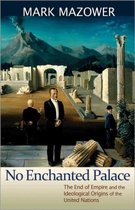
(IIOs). INCLUDES notes of the introduction chapter of Mark Mazower’s book “No Enchanted
Palace: The End of Empire and the Ideological Origins of the United Nations” (Total: 4 pages).
1
“No Enchanted Palace: The End of Empire and the Ideological
Origins of the United Nations” by Mark Mazower - Notes
Introduction
The collapse of the Union of Soviet Socialist Republics (USSR) offered the United Nations (UN) new
challenges but renewed meaning. It could/had to:
● Expand its peacekeeping role.
● Take a more pronounced stand on resettling refugees from war-torn states.
● Facilitate political reconciliation, rebuilding bureaucracies and supervising elections.
● Oversee global social and economic development, providing assistance and advice to the
world’s poorest.
HOWEVER, civil wars and genocides in the Balkans and Africa, internal corruption and the general
undermining of its status provoked criticism of the UN:
● “It had failed to defend the principles of multilateralism and collective security.”
Today, many proposals for the reform of the UN exist, including the ideas to:
● Streamline it to allow fast military action against rogue actors.
● Change the UN to move more roughly against human rights offenders among its members and
do more to stamp certain values (e.g. freedom, democracy) before it’s too late.
● Promote more “human security”, a blend of development goals and rights, and claim the right
to intervene in defence of the world’s citizens when their governments maltreat them.
There is a mix of reactions to the UN’s existence. Some say the world would be a better place without
it, while others strongly defend it.
➔ There is a discussion about it, comparing the UN’s possible move to irrelevance today to that
of the League of Nations (LoN) between both World Wars.
➔ If the UN failed to deal with Saddam Hussein, the 2003 invasion of Iraq would be the
modern-day equivalent of the Abyssinian Crisis or the Munich Agreement of the 1930s.
“Internationalism” is generally presented as something positive and “globalization” is seen as the
contemporary of modern history. The guiding assumption of most scholars and historians seems to be
that the emergence of a type of global community is desirable and inevitable whether achieved by
actors, non-actors or International Organizations (IOs).
The “utopianism” that has attached itself to international bodies like the UN and the past LoN was a
vital part of their appeal, giving them energy, support and valuable political capital.
HOWEVER, the body of literature that has appeared the last few years gives a very one-sided view
of what the UN’s purpose was; generating expectations that its founders never intended to be met.
➔ In 1945, many states and members left the San Francisco founding conference with thoughts
that this new world body was filled with hypocrisy. They saw its universal rhetoric for
(IIOs). INCLUDES notes of the introduction chapter of Mark Mazower’s book “No Enchanted
Palace: The End of Empire and the Ideological Origins of the United Nations” (Total: 4 pages).
1
“No Enchanted Palace: The End of Empire and the Ideological
Origins of the United Nations” by Mark Mazower - Notes
Introduction
The collapse of the Union of Soviet Socialist Republics (USSR) offered the United Nations (UN) new
challenges but renewed meaning. It could/had to:
● Expand its peacekeeping role.
● Take a more pronounced stand on resettling refugees from war-torn states.
● Facilitate political reconciliation, rebuilding bureaucracies and supervising elections.
● Oversee global social and economic development, providing assistance and advice to the
world’s poorest.
HOWEVER, civil wars and genocides in the Balkans and Africa, internal corruption and the general
undermining of its status provoked criticism of the UN:
● “It had failed to defend the principles of multilateralism and collective security.”
Today, many proposals for the reform of the UN exist, including the ideas to:
● Streamline it to allow fast military action against rogue actors.
● Change the UN to move more roughly against human rights offenders among its members and
do more to stamp certain values (e.g. freedom, democracy) before it’s too late.
● Promote more “human security”, a blend of development goals and rights, and claim the right
to intervene in defence of the world’s citizens when their governments maltreat them.
There is a mix of reactions to the UN’s existence. Some say the world would be a better place without
it, while others strongly defend it.
➔ There is a discussion about it, comparing the UN’s possible move to irrelevance today to that
of the League of Nations (LoN) between both World Wars.
➔ If the UN failed to deal with Saddam Hussein, the 2003 invasion of Iraq would be the
modern-day equivalent of the Abyssinian Crisis or the Munich Agreement of the 1930s.
“Internationalism” is generally presented as something positive and “globalization” is seen as the
contemporary of modern history. The guiding assumption of most scholars and historians seems to be
that the emergence of a type of global community is desirable and inevitable whether achieved by
actors, non-actors or International Organizations (IOs).
The “utopianism” that has attached itself to international bodies like the UN and the past LoN was a
vital part of their appeal, giving them energy, support and valuable political capital.
HOWEVER, the body of literature that has appeared the last few years gives a very one-sided view
of what the UN’s purpose was; generating expectations that its founders never intended to be met.
➔ In 1945, many states and members left the San Francisco founding conference with thoughts
that this new world body was filled with hypocrisy. They saw its universal rhetoric for