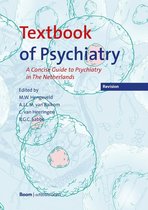
Textbook of Psychiatry
H10.1 Trauma-related disorders
Trauma related disorders are the result of intrusive, usually life-threatening, experiences
and they are characterized by re-experiencing (nightmares), sleep problems and physical
symptoms (tremors, non-specific pains and skin rash).
Experiencing a traumatic event is a precondition for developing acute stress disorder or
PTSD. A traumatic event is an exceptional experience for the individual. It is one that he does
not expect and that often makes him feel helpless or powerless.
Syndromes:
Acute stress disorder:
Develops during a period of 3 days to one month after exposure to one or more traumatic
events. It is usually an anxiety response with re-experiencing, increased reactivity to the
traumatic event, dissociation and irritability.
When an acute life-threatening event takes place, the stress response system is activated.
This produces 3 natural reactions:
- Fight
- Flight
- Freeze
The freeze reaction underlies acute stress disorder. This state is referred to as ‘mental
shock’. There is a feeling of numbness, absence of emotion, experiencing the danger as a
film, as not real (derealization) or as it happening to someone else (depersonalization).
An individual with acute stress disorder will often have extremely negative thoughts about
his role in the traumatic event. He may feel extremely guilty for not preventing the event.
, Posttraumatic stress disorder:
Characteristic of PTSD is that the individual remains in a state of heightened vigilance
(waakzaamheid) long after the danger has passed. The memories remain active in the
working memory.
People with PTSD often wake up ‘bathed in sweat’ or scream in their sleep. They also display
remarkable withdrawal behaviour. In particular, they are scared of acting very aggressively
towards others. Patients also complain about forgetfulness, caused by their focus on danger,
which makes it difficult for them to focus on normal things. They are also exhausted due to
lack of sleep and excessive anxiety and are often plagued by guilt.
H10.1 Trauma-related disorders
Trauma related disorders are the result of intrusive, usually life-threatening, experiences
and they are characterized by re-experiencing (nightmares), sleep problems and physical
symptoms (tremors, non-specific pains and skin rash).
Experiencing a traumatic event is a precondition for developing acute stress disorder or
PTSD. A traumatic event is an exceptional experience for the individual. It is one that he does
not expect and that often makes him feel helpless or powerless.
Syndromes:
Acute stress disorder:
Develops during a period of 3 days to one month after exposure to one or more traumatic
events. It is usually an anxiety response with re-experiencing, increased reactivity to the
traumatic event, dissociation and irritability.
When an acute life-threatening event takes place, the stress response system is activated.
This produces 3 natural reactions:
- Fight
- Flight
- Freeze
The freeze reaction underlies acute stress disorder. This state is referred to as ‘mental
shock’. There is a feeling of numbness, absence of emotion, experiencing the danger as a
film, as not real (derealization) or as it happening to someone else (depersonalization).
An individual with acute stress disorder will often have extremely negative thoughts about
his role in the traumatic event. He may feel extremely guilty for not preventing the event.
, Posttraumatic stress disorder:
Characteristic of PTSD is that the individual remains in a state of heightened vigilance
(waakzaamheid) long after the danger has passed. The memories remain active in the
working memory.
People with PTSD often wake up ‘bathed in sweat’ or scream in their sleep. They also display
remarkable withdrawal behaviour. In particular, they are scared of acting very aggressively
towards others. Patients also complain about forgetfulness, caused by their focus on danger,
which makes it difficult for them to focus on normal things. They are also exhausted due to
lack of sleep and excessive anxiety and are often plagued by guilt.