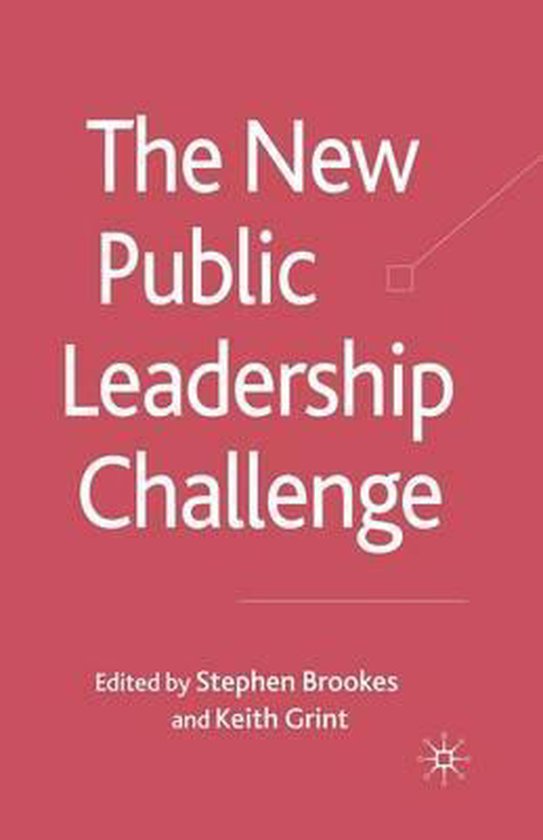
Leadership Studies
PBL #5 Notes
Chapter 19: The Challenge of Leadership for the Third Sector
Alex Murdock
The third sector has some distinctive characteristics which marks it out from the public sector:
1. Size of Organization
o Most third sector organizations are far smaller than typical public sector
organizations
2. Leader of Organization
o Few public sector organizations are led by their founder, while this is common in the
third sector
3. Role of Organization
o Third sector organizations do not necessarily have a service provision role (although
a significant proportion do)
o Campaigning or advocacy role view accepting government contracts as restricting
their freedom of action to engage in this aspect of their role
4. Amount of Independence
o Often construed in terms of a mission which has an underpinning set of values
o Clash of values may appear…
At a ‘mission level’, if an organization is to seek government funding
or contracts
In operational practices (public servants are expected to adopt a
position of ‘neutrality’ and professional detachment in the conduct of
their activities)
o Third sector makes widespread use of networks; ‘cross memberships’ are part of the
organizational landscape
5. Leadership
o ‘Passionate leadership’: carries a sense of personal commitment which, for example
attracts people willing to sacrifice a substantial amount of salary
6. Strategy
o Non-profit organizations run on a high level of informal contact and trust as
opposed to the rules and accountability which are part of the public sector landscape
7. Structure
o Third sector organizations…
o Start with an idea which takes time to form and find its expression in formal
organizational structures
o Initially employ no-one, and the majority of such organizations continue in
this form
o Based on volunteering (i.e. enthusiasm and commitment of unpaid members)
o Differs from public sector organizations, which typically arise from existing
structures with paid staff
1
,The founder element in leadership
Many charities are founded by charismatic and driven individuals whose leadership style
was highly appropriate for their initial success and growth
o Founder folly/syndrome tension which arises when the original founder fails to
adjust his/her leadership style as the organization becomes more structured/formal
Present in private sector (e.g. family firms)
Rare in public sector in which leaders move into pre-existing
organizations with formality, staff, and structures
The founder needs to be an inspirational leader first, and a manager second (if at all)
Founder role gives credibility to third sector leaders they ‘earn’ the role
o Few public sector managers can say that they have founded the organization with
no budget, no salary, and no resources
Founder mythology can be described as passionate leadership
o Definition:
A strong emotional affinity with the raison d’etre of the organization; a
passion for its beliefs; a desire to succeed for the greater good of the
organization; a high degree of personal energy and enthusiasm for the
cause
o Passion is regarded with caution in public sector and takes place alongside a range
of other pressures and imperatives
Size and diversity matters?
Leadership in the third sector is dominated by the majority of relatively small
organizations
Third sector has great diversity in: (1) the degree of complexity, (2) the nature of
operations, and (3) the source of funding
o Cormack and Stanton these 3 factors make it difficult to arrive at a common
basis for the requirements of a CEO in the third sector
o Two-dimensional model generating a series of clusters:
Scale
Main focus of activity (e.g. fundraising, campaigning, service delivery or
membership)
Substantial part of typical CEO role in smaller organizations is
fundraising
Leader or leadership?
Day (2001) leadership emerges with the process of creating shared meanings, both in
terms of sense making and in terms of value added
Third sector organizations can possess a very strong binding ideology or set of norms
An organizational form particular to the third sector federated organization
o Leadership is typically distributed; each local organization is constituted as an
independent organization which belongs to the national body
2
, Does public sector contracting matter if the third sector and public sector share their
values?
Both the public sector and the third sector have been described as possessing strong
value sets
The Nolan report describes the 7 principles of public life
Selflessness, integrity, accountability, honesty, and objectivity are enshrined in the legal
expectation of how trustees of charities will conduct themselves; openness and leadership
are implicit
So third sector values – do they differ?
Aiken (2001, 2002) identifies what is distinctive about the values of voluntary and
cooperative organizations
o Their values are the core of their being
o There is no private sector ‘business bottom line’ to fall back on
o The values cannot be maintained by reference to an ‘official government line’;
they need to be sustained and renewed or the organizations concerned will
deteriorate
Some values encompassed in the Nolan Principles, others not (and in contrast!)
o Paton devotion, compassion, enthusiasm, solidarity, and defiance
Contrasts with ‘objectivity’ and ‘accountability’
o Elsons sociability, reciprocity, collaboration, loyalty, trust
Charity: “an unlimited loving-kindness towards all others”
3
PBL #5 Notes
Chapter 19: The Challenge of Leadership for the Third Sector
Alex Murdock
The third sector has some distinctive characteristics which marks it out from the public sector:
1. Size of Organization
o Most third sector organizations are far smaller than typical public sector
organizations
2. Leader of Organization
o Few public sector organizations are led by their founder, while this is common in the
third sector
3. Role of Organization
o Third sector organizations do not necessarily have a service provision role (although
a significant proportion do)
o Campaigning or advocacy role view accepting government contracts as restricting
their freedom of action to engage in this aspect of their role
4. Amount of Independence
o Often construed in terms of a mission which has an underpinning set of values
o Clash of values may appear…
At a ‘mission level’, if an organization is to seek government funding
or contracts
In operational practices (public servants are expected to adopt a
position of ‘neutrality’ and professional detachment in the conduct of
their activities)
o Third sector makes widespread use of networks; ‘cross memberships’ are part of the
organizational landscape
5. Leadership
o ‘Passionate leadership’: carries a sense of personal commitment which, for example
attracts people willing to sacrifice a substantial amount of salary
6. Strategy
o Non-profit organizations run on a high level of informal contact and trust as
opposed to the rules and accountability which are part of the public sector landscape
7. Structure
o Third sector organizations…
o Start with an idea which takes time to form and find its expression in formal
organizational structures
o Initially employ no-one, and the majority of such organizations continue in
this form
o Based on volunteering (i.e. enthusiasm and commitment of unpaid members)
o Differs from public sector organizations, which typically arise from existing
structures with paid staff
1
,The founder element in leadership
Many charities are founded by charismatic and driven individuals whose leadership style
was highly appropriate for their initial success and growth
o Founder folly/syndrome tension which arises when the original founder fails to
adjust his/her leadership style as the organization becomes more structured/formal
Present in private sector (e.g. family firms)
Rare in public sector in which leaders move into pre-existing
organizations with formality, staff, and structures
The founder needs to be an inspirational leader first, and a manager second (if at all)
Founder role gives credibility to third sector leaders they ‘earn’ the role
o Few public sector managers can say that they have founded the organization with
no budget, no salary, and no resources
Founder mythology can be described as passionate leadership
o Definition:
A strong emotional affinity with the raison d’etre of the organization; a
passion for its beliefs; a desire to succeed for the greater good of the
organization; a high degree of personal energy and enthusiasm for the
cause
o Passion is regarded with caution in public sector and takes place alongside a range
of other pressures and imperatives
Size and diversity matters?
Leadership in the third sector is dominated by the majority of relatively small
organizations
Third sector has great diversity in: (1) the degree of complexity, (2) the nature of
operations, and (3) the source of funding
o Cormack and Stanton these 3 factors make it difficult to arrive at a common
basis for the requirements of a CEO in the third sector
o Two-dimensional model generating a series of clusters:
Scale
Main focus of activity (e.g. fundraising, campaigning, service delivery or
membership)
Substantial part of typical CEO role in smaller organizations is
fundraising
Leader or leadership?
Day (2001) leadership emerges with the process of creating shared meanings, both in
terms of sense making and in terms of value added
Third sector organizations can possess a very strong binding ideology or set of norms
An organizational form particular to the third sector federated organization
o Leadership is typically distributed; each local organization is constituted as an
independent organization which belongs to the national body
2
, Does public sector contracting matter if the third sector and public sector share their
values?
Both the public sector and the third sector have been described as possessing strong
value sets
The Nolan report describes the 7 principles of public life
Selflessness, integrity, accountability, honesty, and objectivity are enshrined in the legal
expectation of how trustees of charities will conduct themselves; openness and leadership
are implicit
So third sector values – do they differ?
Aiken (2001, 2002) identifies what is distinctive about the values of voluntary and
cooperative organizations
o Their values are the core of their being
o There is no private sector ‘business bottom line’ to fall back on
o The values cannot be maintained by reference to an ‘official government line’;
they need to be sustained and renewed or the organizations concerned will
deteriorate
Some values encompassed in the Nolan Principles, others not (and in contrast!)
o Paton devotion, compassion, enthusiasm, solidarity, and defiance
Contrasts with ‘objectivity’ and ‘accountability’
o Elsons sociability, reciprocity, collaboration, loyalty, trust
Charity: “an unlimited loving-kindness towards all others”
3