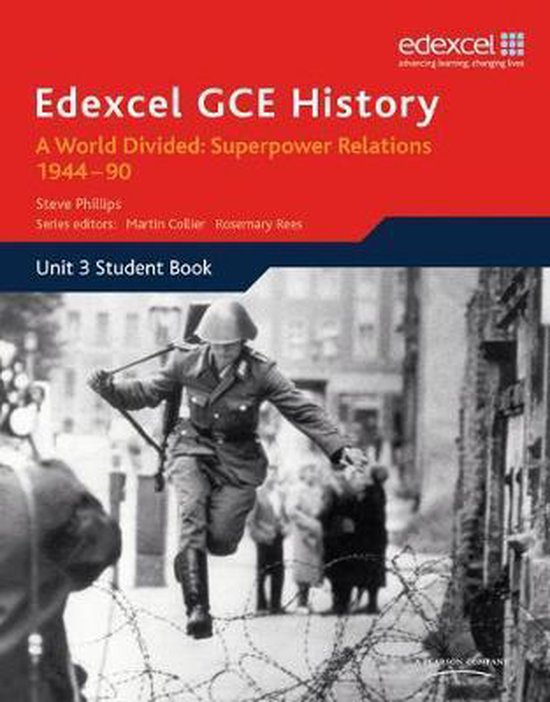
Textbook Revision Notes: A World Divided: Superpower Rela ons 1944-90
Unit 1: The Seeds of Con ict 1917-44
Ideological Di erences
• Bolshevik Revolu on (1917) world's rst socialist state
• Improving condi ons for industrial working class by ending exploita on by middle class and
governments
• Communism viewed as social and poli cally destabilising—communist groups advoca ng
revolu on
• Opposing ideologies
• Marx framework for economic and poli cal principles—to end exploita on
• Belief that capitalist system inherently unstable thus fall inevitable
Economic di erences
• Communist
o Factories, land and businesses government control on people's behalf
o Na onalisa on allow fair distribu on of goods
o Community responsibility
• Capitalist
o Private ownership of businesses and keep pro ts
o Incen ve of individual gain
Poli cal di erences
• Communist
o Di erent poli cal par es result of con ic ng classes, classless so one-party state
o Promote class unity not na onalism
• Capitalist
o Upholding liberal democracy: freedom to vote, speech, worship and press
o Choice of government
Interna onal rela ons
• Communist
o (Not Marx but Bolshevik de ned principles) believed con ict inevitable (opposing)
o Success of communism = worldwide revolu on and collapse of capitalism
o Comintern set up to coordinate groups + support a empts to undermine capitalism
• Capitalism
, o Wilsonian liberalism (President Wilson 1918) Ideological framework for interna onal
rela ons
o 1) Self-determina on: right of all na onal groups to choose gov. democra cally
o 2) Open markets: trade barriers + spheres of in uence that limited freedom of
capitalism to be dismantled
o 3) Collec ve security: world peace-keeping organisa on to guarantee safety
o Ideas not original but on global scale—US moral duty to spread, shi away from
tradi onal foreign policy (Wilson's ideas: US Senate rejected Versailles Treaty 1919—
return to isola onism)
Tensions between USSR and capitalist world 1920s-30s
• Ideological: diametrically opposed, communism threat privileges, power and status of elites
• Treaty of Brest-Litovsk (March 1918): Bolshevik gov. pulled out of WW1, feeling of betrayal
among allies (Britain and France face Germany alone)
• Russian debts: Soviet regime refused to honour previous governments debts
o Policy of na onalising economic sectors = foreign companies lost investments
o France especially a ected, investors in Russian economy pressure French gov. to
recover losses
• Execu on of Tsar NII: Cousin of King George V so reluctant communicate
• Russian Civil War: Allies (Brit, France, USA and Japan) supported Bolshevik enemies 1917-21
• Comintern (Third Interna onal): An -capitalist propaganda encourage overthrow gov.
o US alarm at growing strength of communism in France and Spain response to Great
Economic Depression of 1930s
• Mistrust and suspicion: undermined Britain and France a empts to work with S.U
o USSR suspicious of Britain's policy of appeasement—saw as a empt to placate and
turn a en on from West to USSR
o Hitler demanded Czechoslovakia 1938 and 1939, Britain and France ine ec ve
• Nazi-Soviet Pact (August 1939): Stalin to limit threat of German invasion S.U and gain me
o Britain + France condemned (but own policies)
Strains in the Grand Alliance
• Hitler invasion of S.U (22 June 1941) + Japan bombed Pearl Harbour (December 1941) USA,
USSR and Britain allies against Nazi Germany (Italy and Japan)
• Churchill, Stalin + Roosevelt working rela onship—Churchill need for SU, Stalin need second
front to relieve pressure on S.U, Roosevelt focus on winning (not a erwards)
• Tehran (November 1943) issues on Poland, coopera on but divisions and tension
, • Strains
o Opening Second Front: ming, Stalin concern over S.U security (+economic and
human losses) but Britain and USA refused un l right me = suspicious
o Poland: geographically very important for S.U security (3 invasions of Russia 20th C),
provisional gov. exile in London (1939) + Union of Polish Patriots 'communist friendly'
based S.U
o Key ques ons: borders of Poland and form of government
Leaders
• Joseph Stalin (1879-1953)
o Manipula ve, prac cal, ruthless
o Leader a er death of Lenin 1924
o Harsh industrialisa on, collec visa on, terror, censorship and propaganda
o Suspicious of West, saw capitalist powers as an -Bolshevik, prevent foreign a ack
• Franklin D. Roosevelt (1882-1945)
o Re-elected three mes
o New Deal: measures to address problems caused by Great Depression
o USA into WW2 a er bombing of Pearl Harbour, op mis c about nego a ng Stalin
• Winston Churchill (1874-1965)
o Prime Minister during WW2 focused on conduct of war, returned 1951-55
o An -communist but willing to work with S.U against Nazi Germany, suspicious post-
war 'Iron Curtain'
Extent of breakdown in superpower rela ons by end of 1944
• Long-term causes of con ict since 1917: ideologies
• Defeat of Nazi Germany = power vacuum
• Con ict not inevitable—tensions minimum as neither world role before 1941
• US capacity but policy of isola onism
• USSR lack capacity—impact of WW1 then civil war
• WW2 forced both onto 'world stage', post-war ability and will to impose will
, Unit 2: How did the Cold War develop?
Legacy of WW2
• Power vacuum (short-term cause)
o large areas of Europe le without gov/administra on
o Europe economically devastated, over 16m homeless, need reconstruc on
o Highlighted emergence of US and USSR as powers with capacity to dominate
o USA produced 50% world's manufacturing output, sole possessor of atomic bomb,
navy as big as every other put together
o USSR severe economic hardship 1945, over 11m Red Army troops occupied Eastern
Europe
• Ideological di erences
o Roosevelt US in uence ensure base based on Wilsonian Liberalism
o Promote interna onal coopera on and spread democracy
o UN: free independent na ons
o Opening economic markets essen al to protect US trade interests
o USSR posi on pursue foreign policy aims of securing borders + spread communism by
territorial acquisi on
Unit 1: The Seeds of Con ict 1917-44
Ideological Di erences
• Bolshevik Revolu on (1917) world's rst socialist state
• Improving condi ons for industrial working class by ending exploita on by middle class and
governments
• Communism viewed as social and poli cally destabilising—communist groups advoca ng
revolu on
• Opposing ideologies
• Marx framework for economic and poli cal principles—to end exploita on
• Belief that capitalist system inherently unstable thus fall inevitable
Economic di erences
• Communist
o Factories, land and businesses government control on people's behalf
o Na onalisa on allow fair distribu on of goods
o Community responsibility
• Capitalist
o Private ownership of businesses and keep pro ts
o Incen ve of individual gain
Poli cal di erences
• Communist
o Di erent poli cal par es result of con ic ng classes, classless so one-party state
o Promote class unity not na onalism
• Capitalist
o Upholding liberal democracy: freedom to vote, speech, worship and press
o Choice of government
Interna onal rela ons
• Communist
o (Not Marx but Bolshevik de ned principles) believed con ict inevitable (opposing)
o Success of communism = worldwide revolu on and collapse of capitalism
o Comintern set up to coordinate groups + support a empts to undermine capitalism
• Capitalism
, o Wilsonian liberalism (President Wilson 1918) Ideological framework for interna onal
rela ons
o 1) Self-determina on: right of all na onal groups to choose gov. democra cally
o 2) Open markets: trade barriers + spheres of in uence that limited freedom of
capitalism to be dismantled
o 3) Collec ve security: world peace-keeping organisa on to guarantee safety
o Ideas not original but on global scale—US moral duty to spread, shi away from
tradi onal foreign policy (Wilson's ideas: US Senate rejected Versailles Treaty 1919—
return to isola onism)
Tensions between USSR and capitalist world 1920s-30s
• Ideological: diametrically opposed, communism threat privileges, power and status of elites
• Treaty of Brest-Litovsk (March 1918): Bolshevik gov. pulled out of WW1, feeling of betrayal
among allies (Britain and France face Germany alone)
• Russian debts: Soviet regime refused to honour previous governments debts
o Policy of na onalising economic sectors = foreign companies lost investments
o France especially a ected, investors in Russian economy pressure French gov. to
recover losses
• Execu on of Tsar NII: Cousin of King George V so reluctant communicate
• Russian Civil War: Allies (Brit, France, USA and Japan) supported Bolshevik enemies 1917-21
• Comintern (Third Interna onal): An -capitalist propaganda encourage overthrow gov.
o US alarm at growing strength of communism in France and Spain response to Great
Economic Depression of 1930s
• Mistrust and suspicion: undermined Britain and France a empts to work with S.U
o USSR suspicious of Britain's policy of appeasement—saw as a empt to placate and
turn a en on from West to USSR
o Hitler demanded Czechoslovakia 1938 and 1939, Britain and France ine ec ve
• Nazi-Soviet Pact (August 1939): Stalin to limit threat of German invasion S.U and gain me
o Britain + France condemned (but own policies)
Strains in the Grand Alliance
• Hitler invasion of S.U (22 June 1941) + Japan bombed Pearl Harbour (December 1941) USA,
USSR and Britain allies against Nazi Germany (Italy and Japan)
• Churchill, Stalin + Roosevelt working rela onship—Churchill need for SU, Stalin need second
front to relieve pressure on S.U, Roosevelt focus on winning (not a erwards)
• Tehran (November 1943) issues on Poland, coopera on but divisions and tension
, • Strains
o Opening Second Front: ming, Stalin concern over S.U security (+economic and
human losses) but Britain and USA refused un l right me = suspicious
o Poland: geographically very important for S.U security (3 invasions of Russia 20th C),
provisional gov. exile in London (1939) + Union of Polish Patriots 'communist friendly'
based S.U
o Key ques ons: borders of Poland and form of government
Leaders
• Joseph Stalin (1879-1953)
o Manipula ve, prac cal, ruthless
o Leader a er death of Lenin 1924
o Harsh industrialisa on, collec visa on, terror, censorship and propaganda
o Suspicious of West, saw capitalist powers as an -Bolshevik, prevent foreign a ack
• Franklin D. Roosevelt (1882-1945)
o Re-elected three mes
o New Deal: measures to address problems caused by Great Depression
o USA into WW2 a er bombing of Pearl Harbour, op mis c about nego a ng Stalin
• Winston Churchill (1874-1965)
o Prime Minister during WW2 focused on conduct of war, returned 1951-55
o An -communist but willing to work with S.U against Nazi Germany, suspicious post-
war 'Iron Curtain'
Extent of breakdown in superpower rela ons by end of 1944
• Long-term causes of con ict since 1917: ideologies
• Defeat of Nazi Germany = power vacuum
• Con ict not inevitable—tensions minimum as neither world role before 1941
• US capacity but policy of isola onism
• USSR lack capacity—impact of WW1 then civil war
• WW2 forced both onto 'world stage', post-war ability and will to impose will
, Unit 2: How did the Cold War develop?
Legacy of WW2
• Power vacuum (short-term cause)
o large areas of Europe le without gov/administra on
o Europe economically devastated, over 16m homeless, need reconstruc on
o Highlighted emergence of US and USSR as powers with capacity to dominate
o USA produced 50% world's manufacturing output, sole possessor of atomic bomb,
navy as big as every other put together
o USSR severe economic hardship 1945, over 11m Red Army troops occupied Eastern
Europe
• Ideological di erences
o Roosevelt US in uence ensure base based on Wilsonian Liberalism
o Promote interna onal coopera on and spread democracy
o UN: free independent na ons
o Opening economic markets essen al to protect US trade interests
o USSR posi on pursue foreign policy aims of securing borders + spread communism by
territorial acquisi on