

AQA • Law
Latest uploads for Law at AQA. Looking for Law notes at AQA? We have lots of notes, study guides and study notes available for Law at AQA.
-
486
-
3
-
78
Courses Law at AQA
Notes available for the following courses of Law at AQA
-
Unit 1 LAW01 - Law Making and the Legal System
-
Unit 2 LAW02 - The Concept of Liability
-
Unit 3 LAW03 - Criminal Law (Offences against the Person) or Contract Law
-
Unit 4 LAW04 - Criminal Law (Offences against Property) or Tort, and Concepts of Law
Popular books AQA • Law
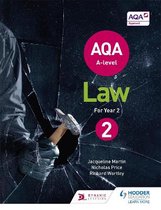
Jacqueline Martin, Richard Wortley • ISBN 9781510401747
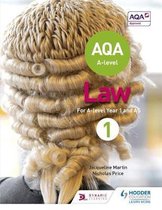
Jacqueline Martin, Nicholas Price • ISBN 9781510401648

Guy Blundell, Emma Bateman • ISBN 9781408519714
Latest content AQA • Law

Occupiers' Liability is a branch of negligence that deals with the duty of care owed by those who occupy land or premises to those who enter them. In the UK, this is governed by two separate statutes: the 1957 Act (for lawful visitors) and the 1984 Act (for trespassers). The core of any claim depends on identifying the Occupier (the person with "sufficient control" over the premises, per Wheat v E Lacon & Co) and the Premises (any fixed or moveable structure, including vessels, vehic...
- Summary
- • 3 pages's •
-
AQA•Unit 4 LAW04 - Criminal Law or Tort, and Concepts of Law

Occupiers' Liability is a branch of negligence that deals with the duty of care owed by those who occupy land or premises to those who enter them. In the UK, this is governed by two separate statutes: the 1957 Act (for lawful visitors) and the 1984 Act (for trespassers). The core of any claim depends on identifying the Occupier (the person with "sufficient control" over the premises, per Wheat v E Lacon & Co) and the Premises (any fixed or moveable structure, including vessels, vehic...
- Summary
- • 4 pages's •
-
AQA•Unit 4 LAW04 - Criminal Law or Tort, and Concepts of Law

In Tort Law, Economic Loss refers to financial damage. The law makes a very sharp distinction between Consequential Economic Loss (which is easy to claim) and Pure Economic Loss (which is generally restricted). The courts limit these claims to prevent "floodgates" of litigation where a single negligent act (like cutting a power cable) could lead to thousands of businesses claiming for lost profits.
- Summary
- • 2 pages's •
-
AQA•Unit 4 LAW04 - Criminal Law or Tort, and Concepts of Law

In Tort Law, Psychiatric Injury (also known as "nervous shock") refers to a diagnosed mental condition caused by a defendant's negligence. The courts are traditionally cautious here to avoid "floodgates" of litigation, so the rules are much stricter than for physical injuries. To claim, the condition must be a recognized psychiatric illness (e.g., PTSD, clinical depression). Mere grief, shock, or anxiety is not sufficient (Reilly v Merseyside RHA).
- Summary
- • 4 pages's •
-
AQA•Unit 4 LAW04 - Criminal Law or Tort, and Concepts of Law

The Duty of Care is the first essential element of a negligence claim. It establishes a legal relationship between the defendant and the claimant, requiring the defendant to act with reasonable care to avoid causing harm. In A-Level Law, you must distinguish between "established duties" (where the law already recognizes a relationship) and "novel situations" (where the court must decide if a duty should exist).
- Summary
- • 3 pages's •
-
AQA•Unit 4 LAW04 - Criminal Law or Tort, and Concepts of Law

In Tort Law, Damages are the primary remedy aimed at restitution—putting the claimant back in the position they would have been in had the tort not occurred (Livingstone v Rawyards Coal Co). Unlike criminal fines, damages are compensatory, not punitive. The court divides damages into two main categories: Special Damages (calculable losses up to the date of trial) and General Damages (speculative losses looking into the future).
- Summary
- • 2 pages's •
-
AQA•Unit 4 LAW04 - Criminal Law or Tort, and Concepts of Law

In the law of Tort, Breach of Duty is the second element of the negligence test (Duty, Breach, Damage). It occurs when a defendant fails to act as a "reasonable person" would have in the same situation. This is an objective test, meaning the court does not care if the defendant did their "best"; they care if the defendant reached the standard of a competent person performing that task.
- Summary
- • 4 pages's •
-
AQA•Unit 4 LAW04 - Criminal Law or Tort, and Concepts of Law

In general tort law (including Negligence and Private Nuisance), defendants can rely on several "General Defences." These are distinct from the specific statutory protections found in Occupiers' Liability, though they share the same underlying legal logic.
- Summary
- • 3 pages's •
-
AQA•Unit 4 LAW04 - Criminal Law or Tort, and Concepts of Law

In Occupiers' Liability (governed by the 1957 Act for lawful visitors and the 1984 Act for trespassers), a defendant can avoid or reduce their liability by using several specific defences. Because this is a branch of negligence, the standard "tort" defences apply, but they have unique statutory twists.
- Summary
- • 2 pages's •
-
AQA•Unit 4 LAW04 - Criminal Law or Tort, and Concepts of Law

case directory
- Summary
- • 7 pages's •
-
AQA•Unit 4 LAW04 - Criminal Law or Tort, and Concepts of Law